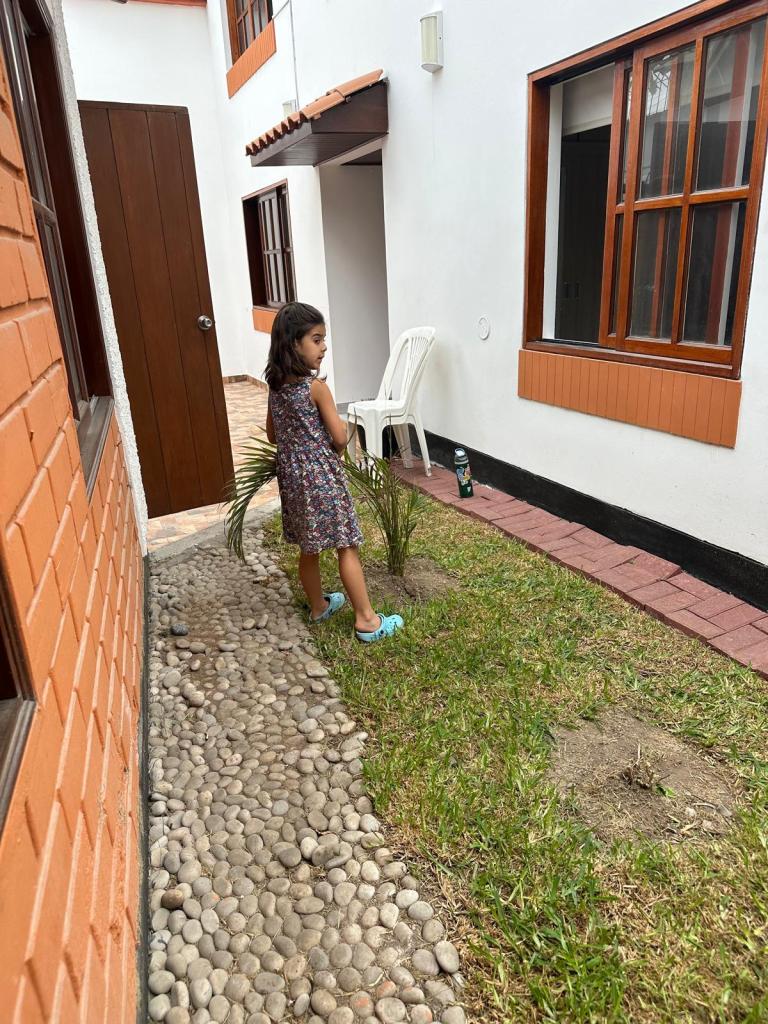
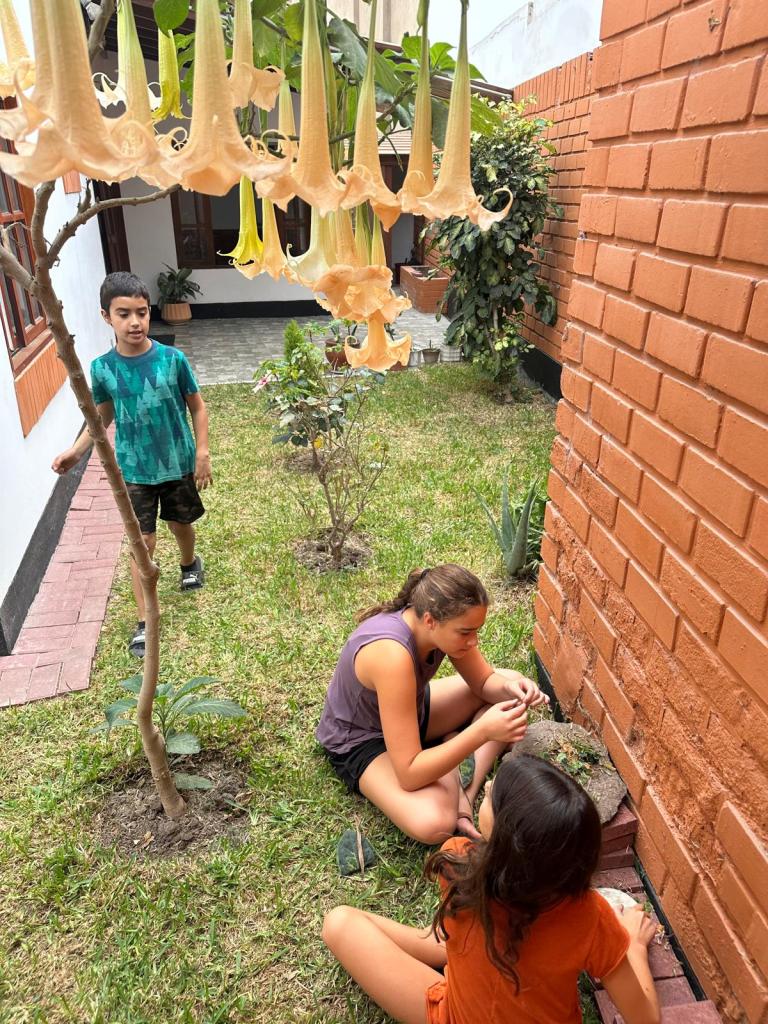
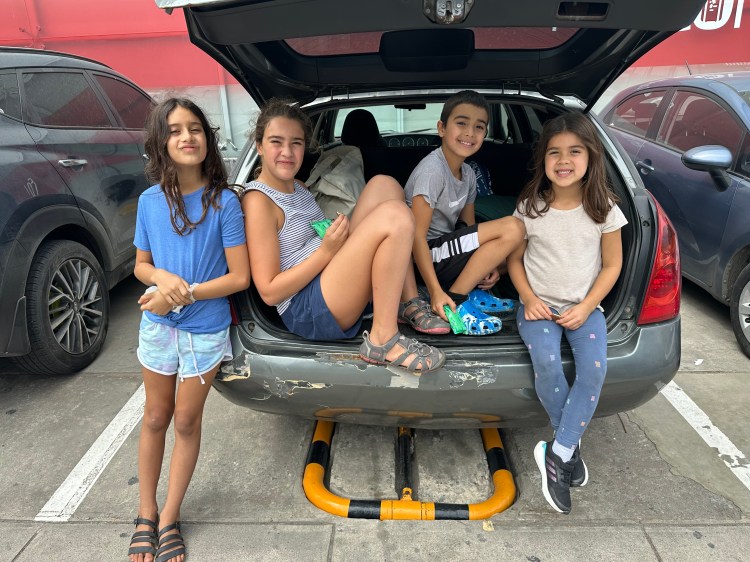
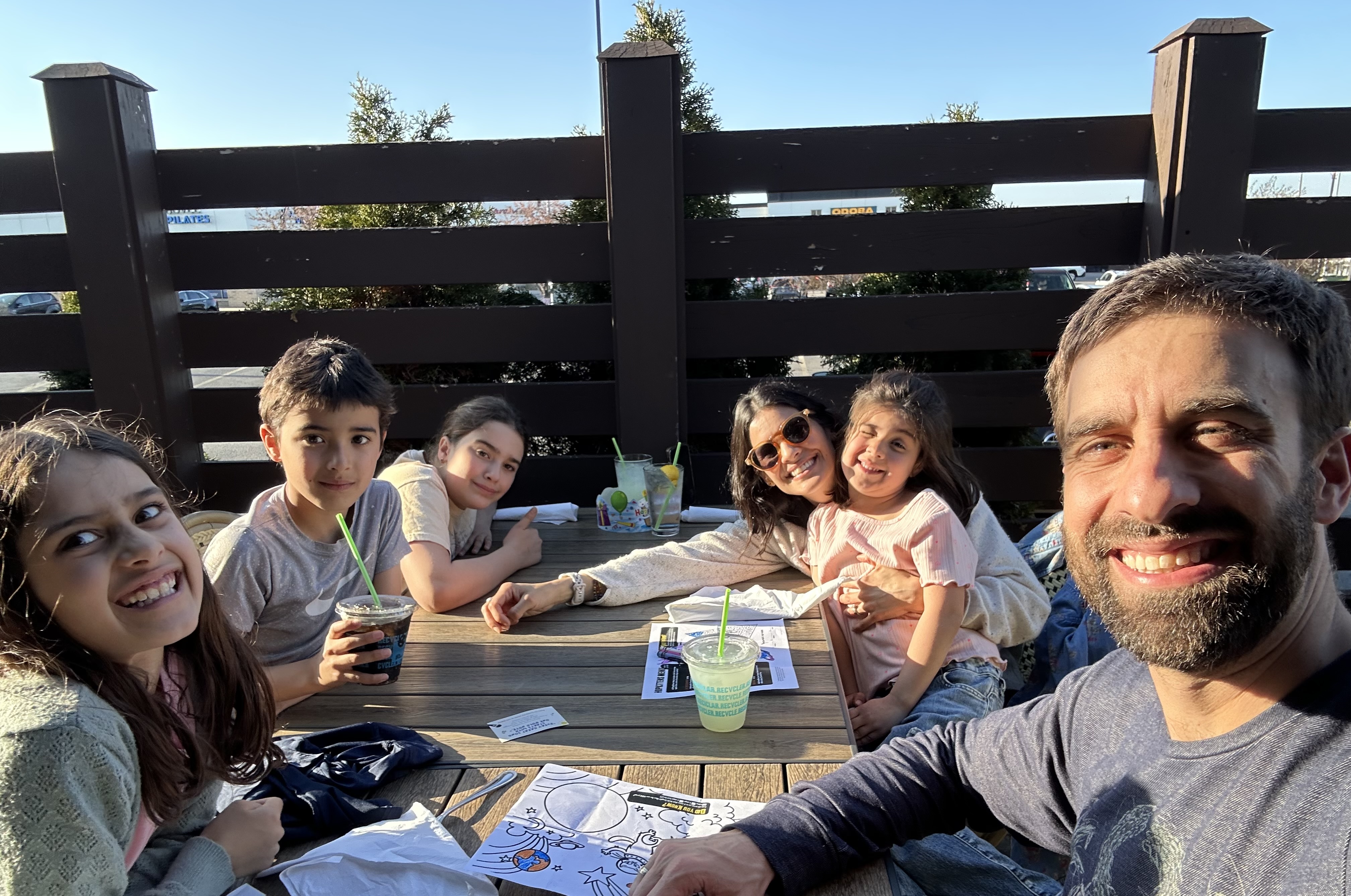
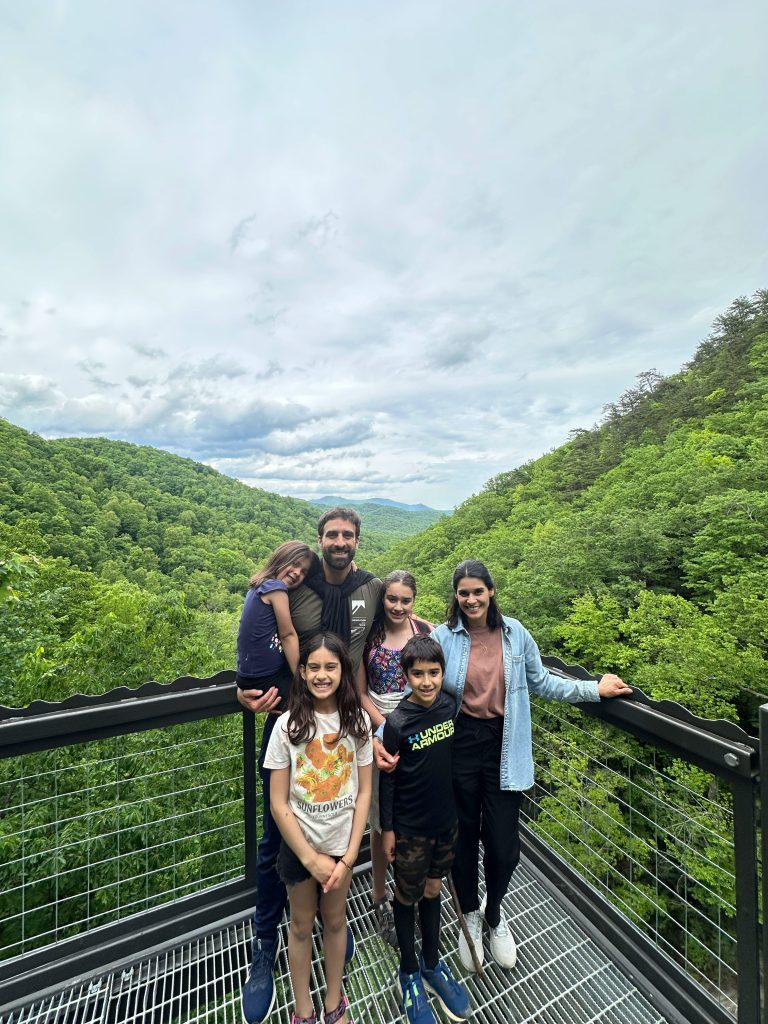
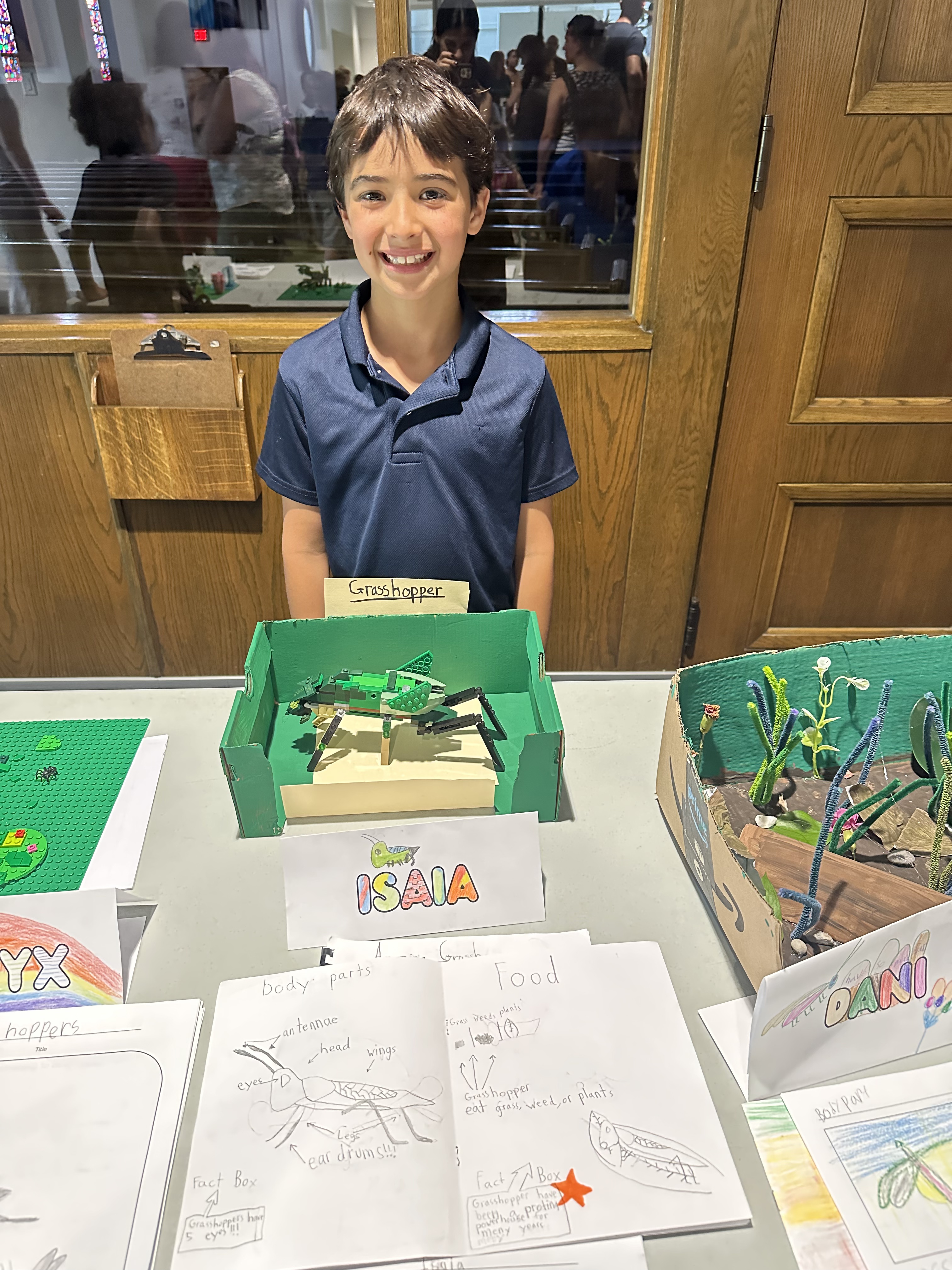
In our last update, we asked that you pray that God would provide a car and housing. The next week, God answered those prayers! The Lord provided the very type of car for which we were looking within out budget and in good condition. We also found a house with a small yard (not easy to find in Lima) and space for a home office. We were able to begin the move-in process two days before we had to leave the place we were staying when we arrived in Peru. Thank the Lord for his great timing!
The house has come with a few surprises that have entailed a lot of work. We’ve been chipping away little-by-little, trying to settle in for the long haul.
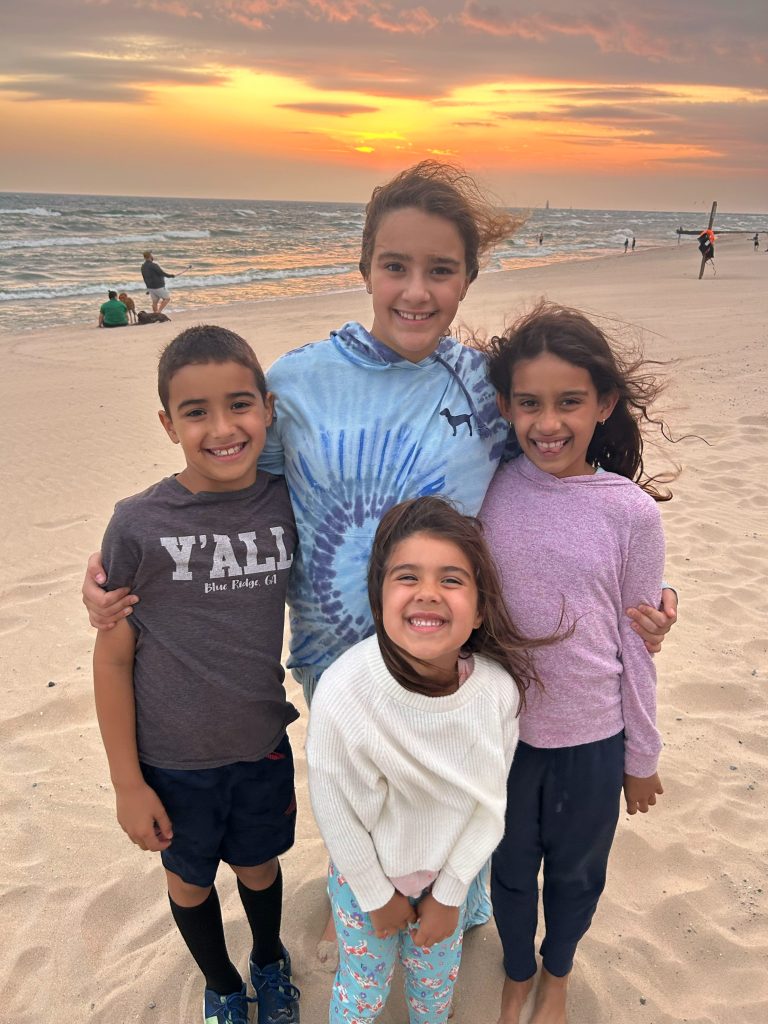
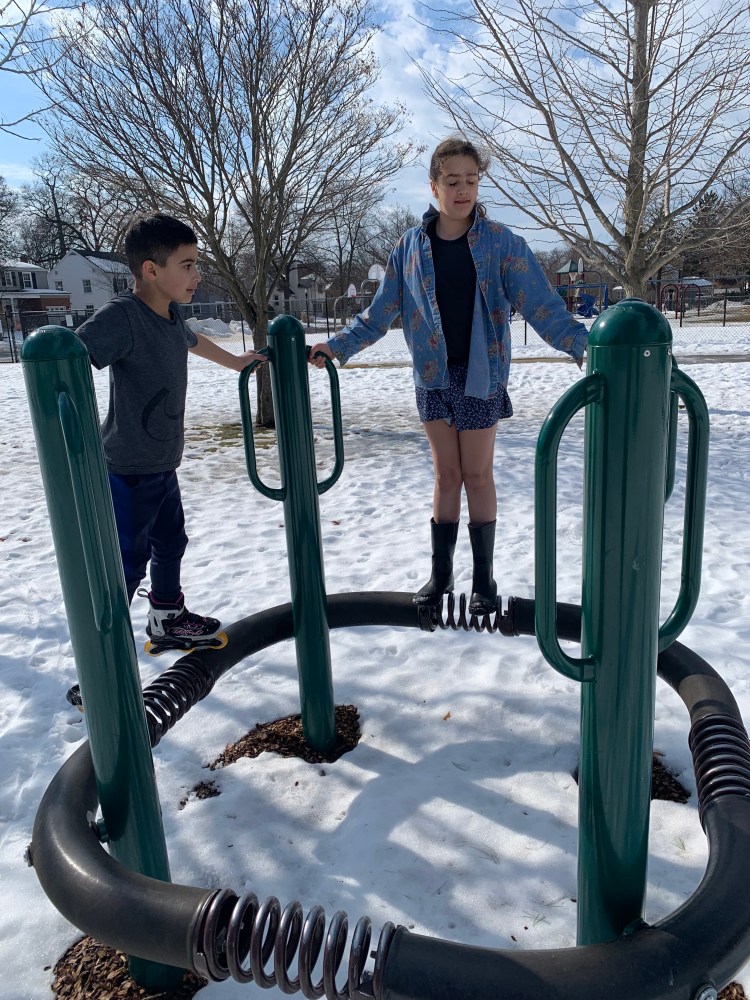
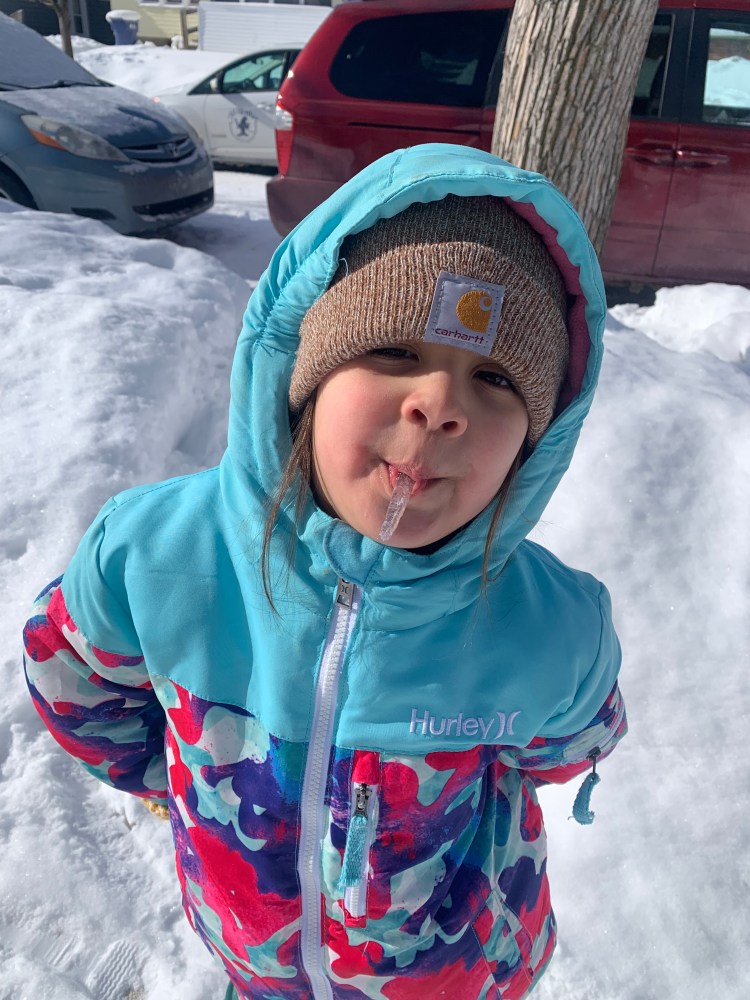
Adriana and the Kids
In September, we began diving into ministry. For Adriana that has meant homeschooling our four children. Adriana seeks to help the kids continue to improve their English reading skills and to develop across the board. As of now, we plan for them to attend a Peruvian school next year; the Peruvian school year runs March–December. Several things need to fall into place for that to happen—one school we liked does not have openings for all our kids. We are not stressing about that (yet), as we’ve learned that we often need to hold our plans somewhat lightly. It’s also possible that Adriana and the kids will fall in love with homeschool.
CTB and Other Ministry
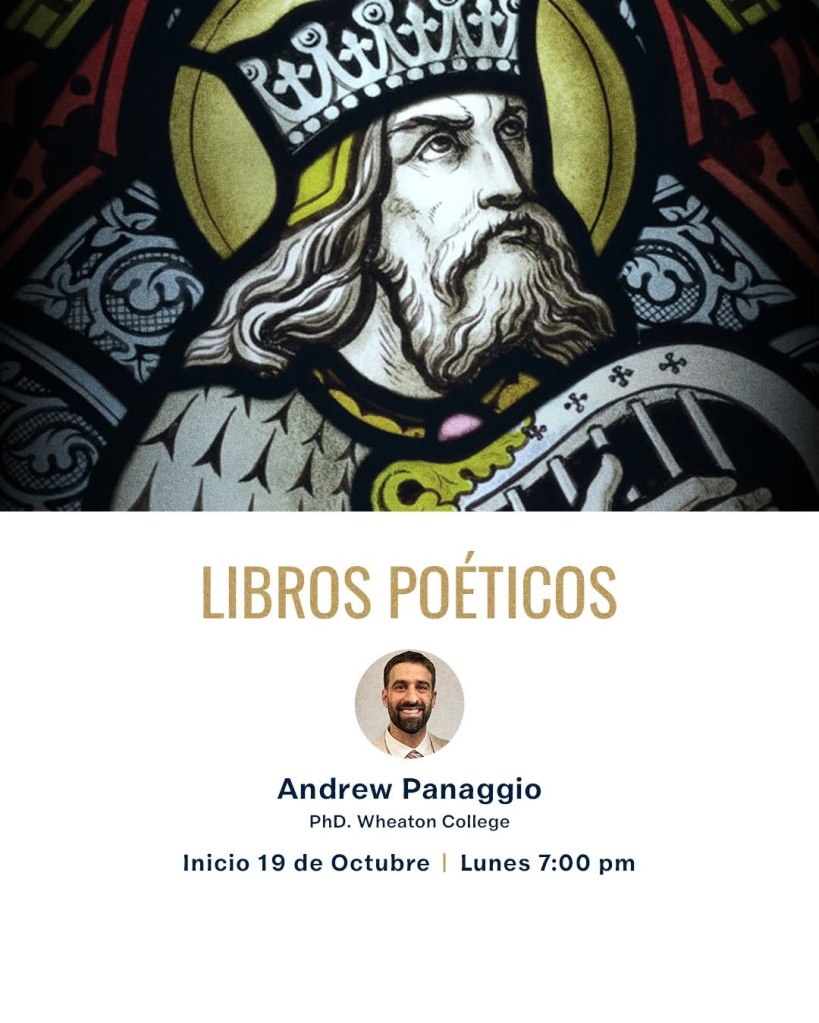
My role has a couple of parts. I serve full-time with a Peruvian seminary called Centros Teológicos Bautistas (CTB), where I am Professor of Old Testament and Academic Director. My first course on the poetical books of the Old Testament begins on October 19. I’m in the midst of researching for and designing this 8-week course. We closed registration early after 40 students signed up.
At the same time, I’m easing into the academic side of the job, meeting the team and faculty, and planning for the future. This seminary has the potential to bless a lot of people because of the great foundation they have built.
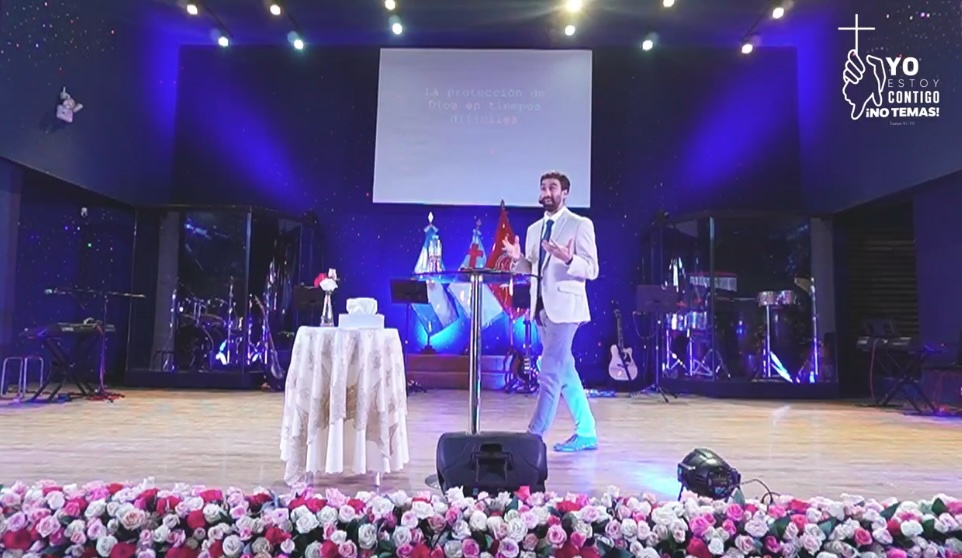
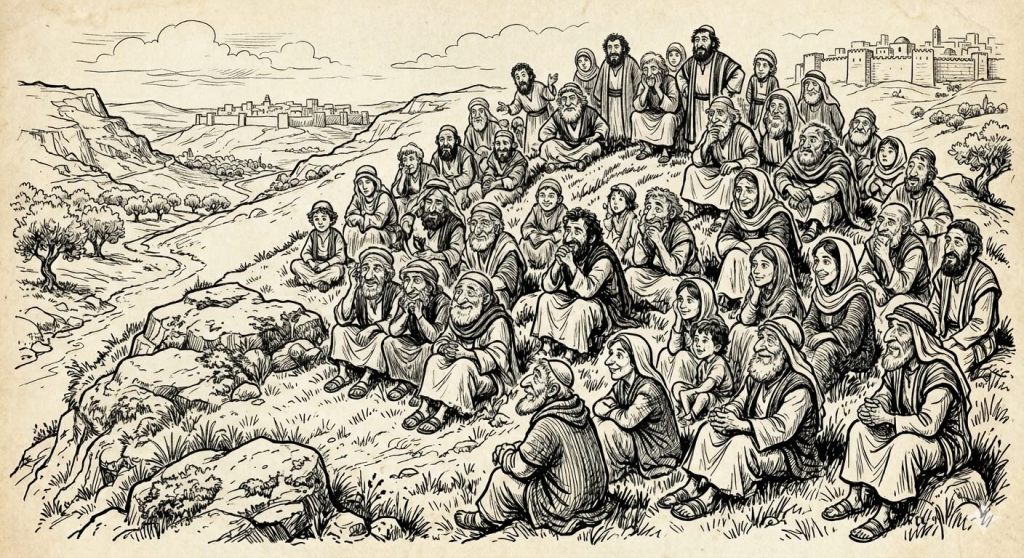
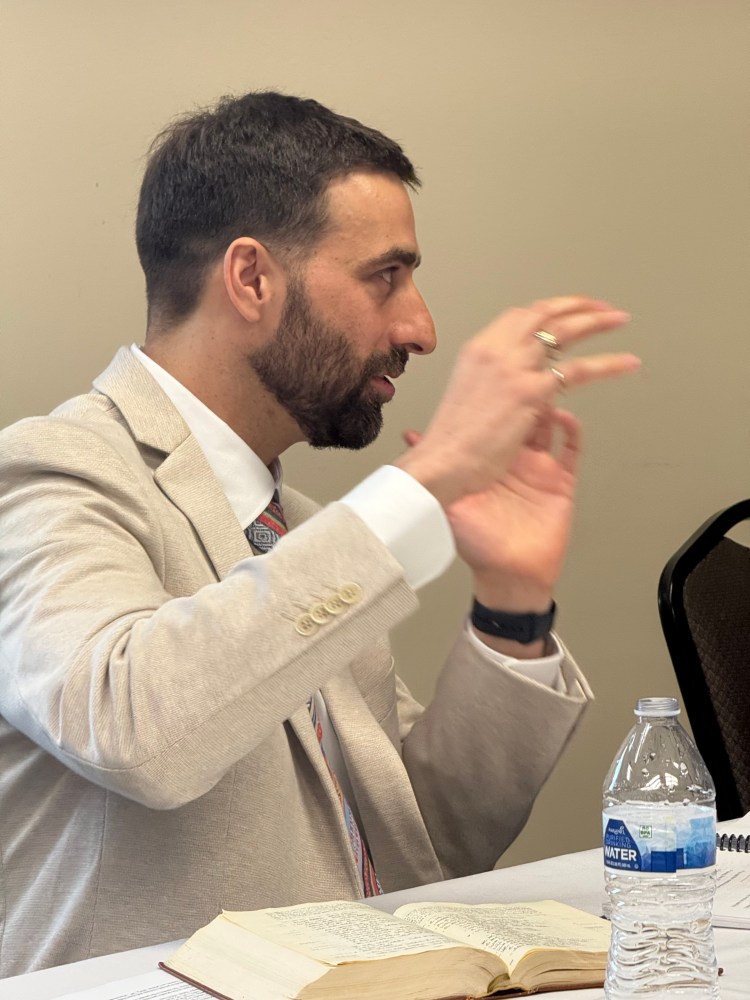
In addition to serving at the seminary, many other opportunities to preach, teach, and serve often present themselves. For example, on September 30, a Pentecostal church planted 49 years ago by the parents of a friend invited me to preach during their anniversary celebration (for extra credit, you can see the whole sermon here).
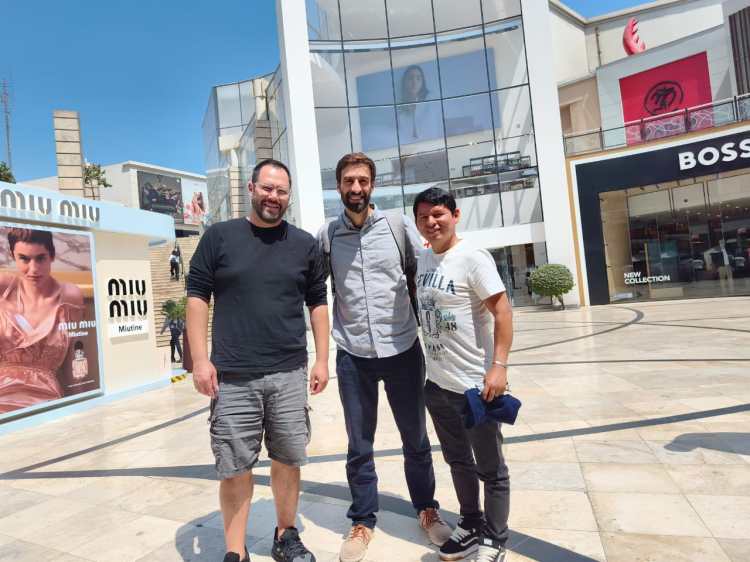
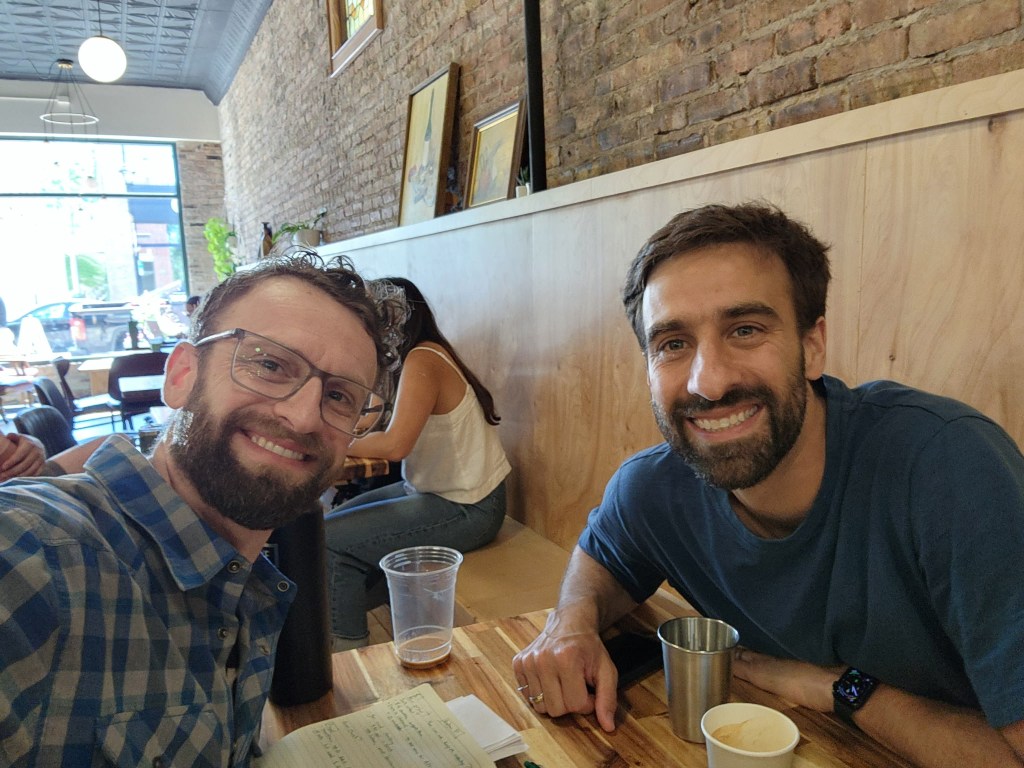
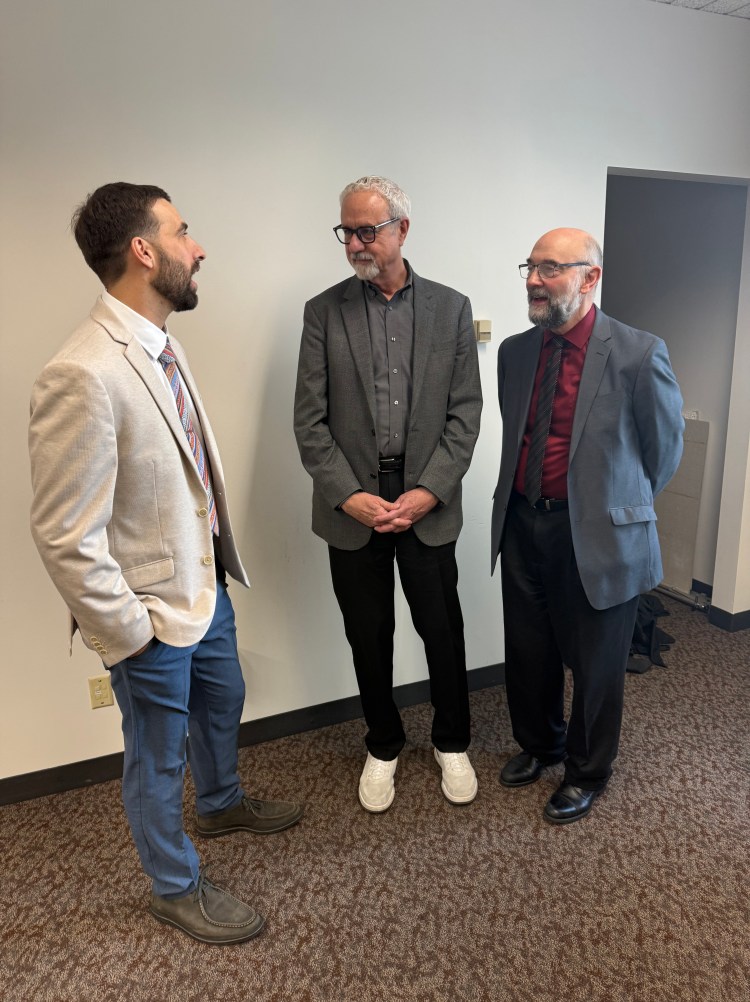
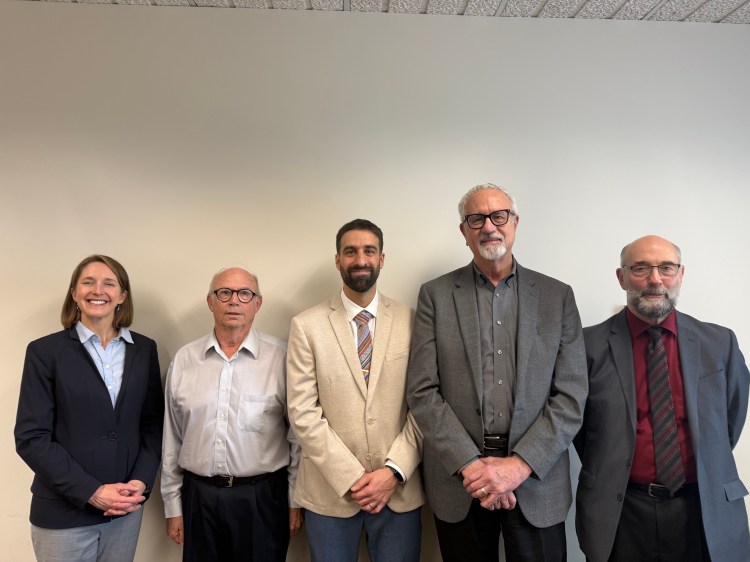
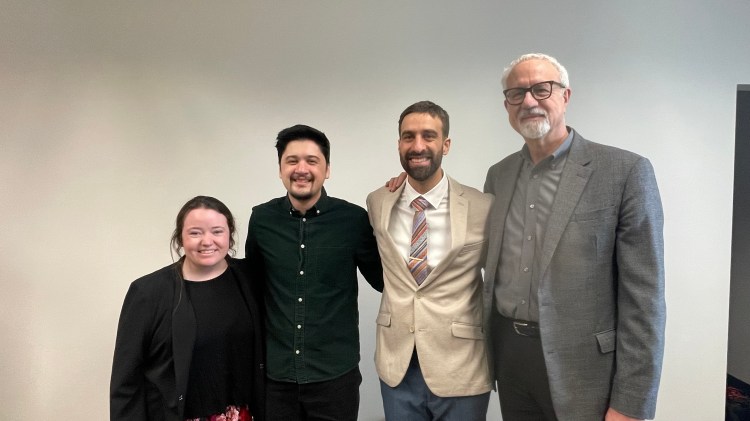
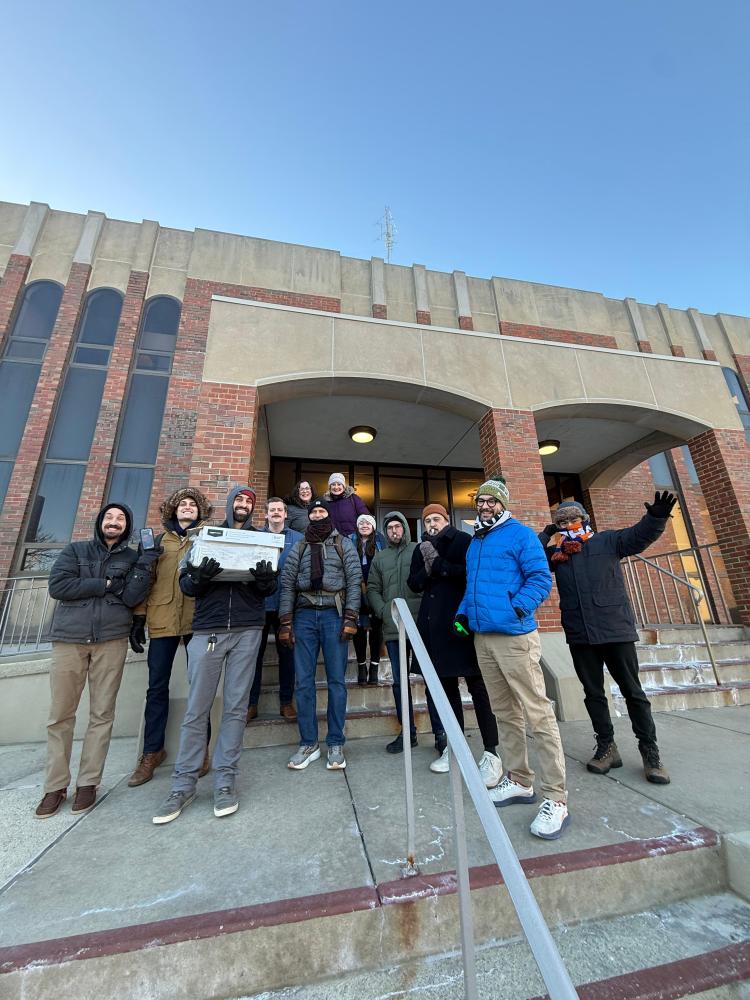
On my left, missionary and friend Daniel Eguiluz. On my right, Pastor Christian Lazo, who invited me to preach.
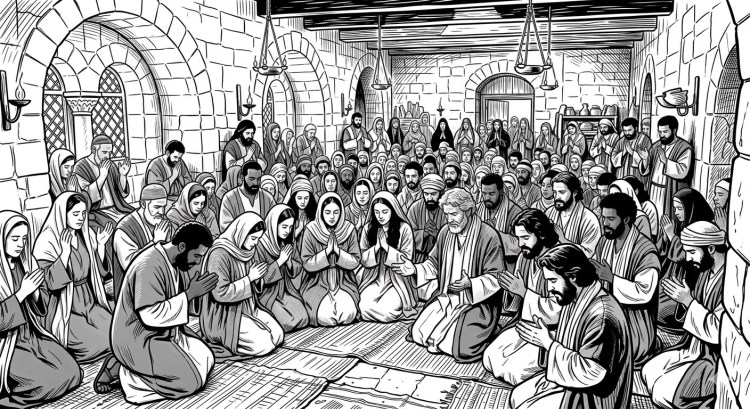
This church has planted somewhere between 5-10 other churches around Peru and even in Argentina. Every year on the same date they have a three-day “party” with three daily services, starting at 5 am and ending at 9 pm! They asked me to preach at one of the services, on the topic of “God’s protection during hard times.” Their passion, commitment, and energy, even on day three(!), filled me with energy and excitement for ministry. It was also fun to see how brothers and sisters in the faith worship differently. One example… after opening my sermon with a story, I said, “please pray with me.” I guess I meant that somewhat figuratively. But every single one of the people there immediately stood up and began praying out loud while I prayed on the mic. It was really cool to hear 400 people praying all together. Although it was a bit difficult to concentrate on my own words! That is how they pray every time!
Screenshot
Please Pray
That God would give us wisdom as we adapt to life in Lima.
That God would open the right educational doors for our kids and that God would provide friends for them.
That my efforts would be a blessing to CTB and that CTB would continue to grow and improve as we train pastors and ministry leaders.
Thank you so much for your generous support and for your prayers. All of this makes it possible for us to serve our Lord in Peru!
This is a double post. I wrote the first the day we arrived, but did not have a chance to post it. Thanks so much (in advance) for taking the time to read!
August 12, 2026 — We made it!
And we’re off!
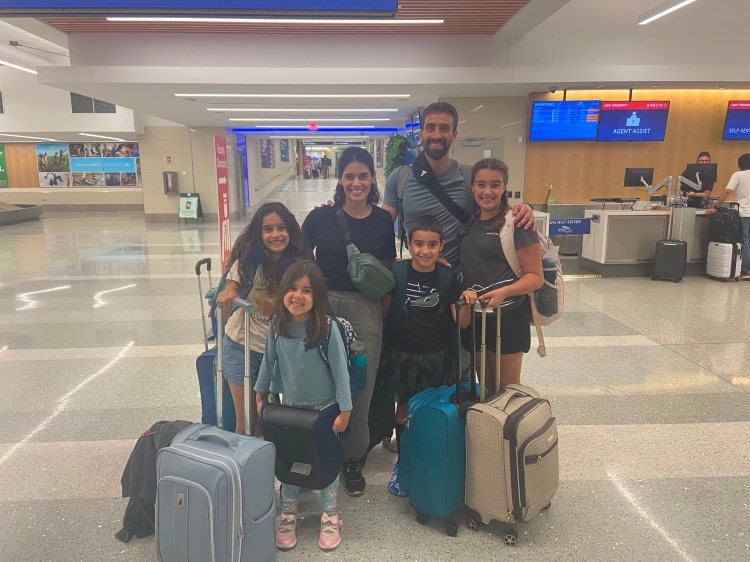
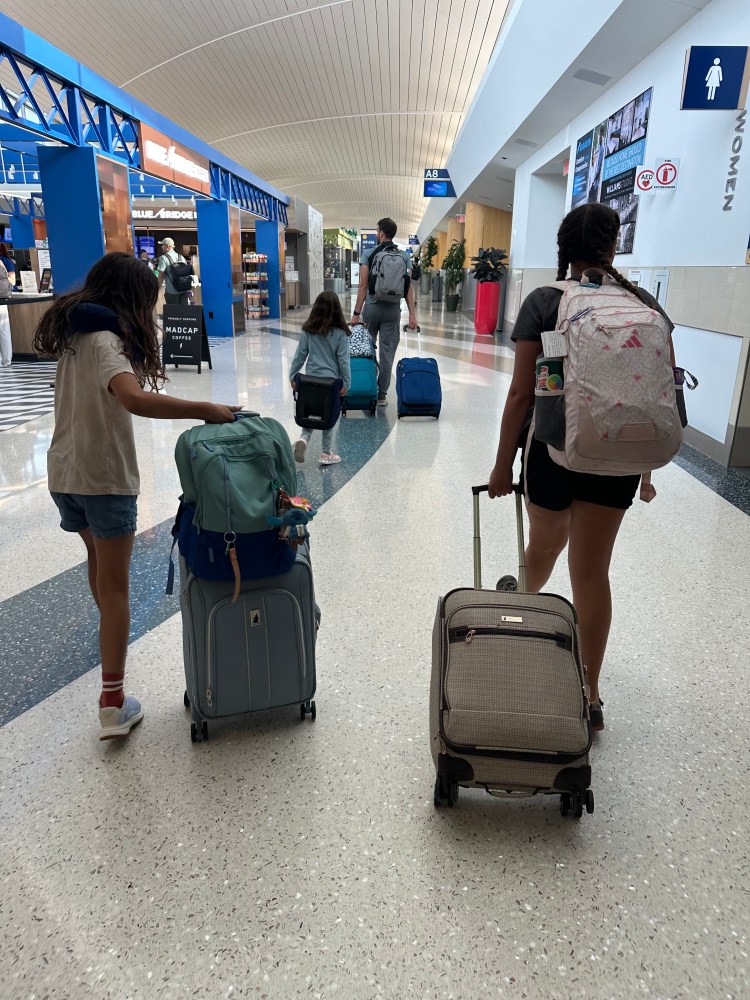
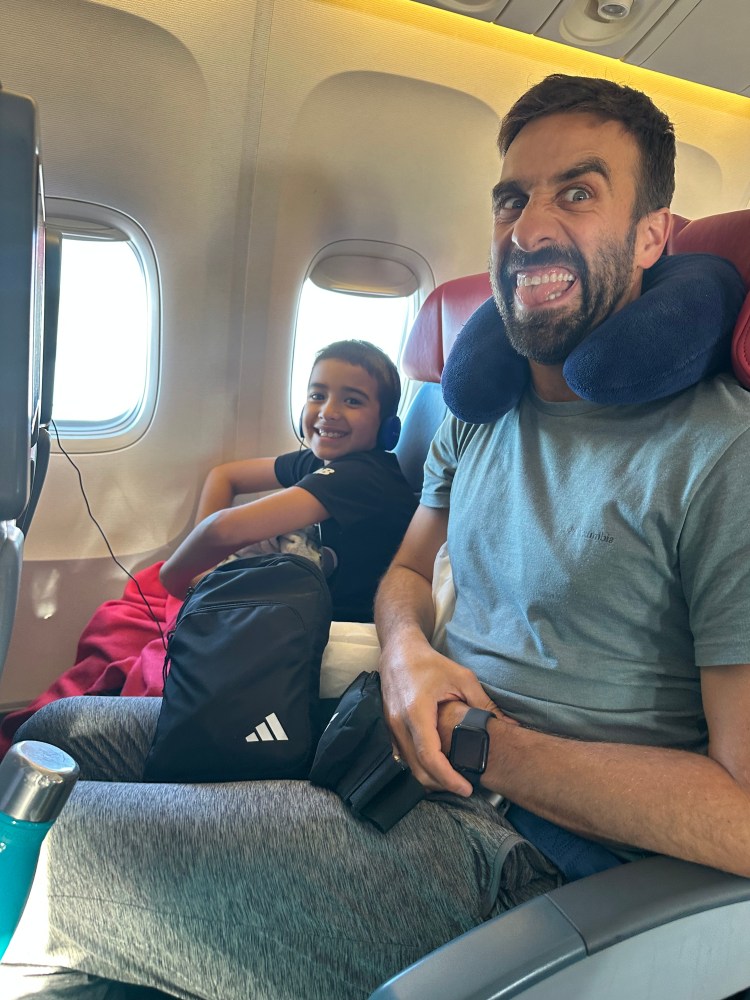
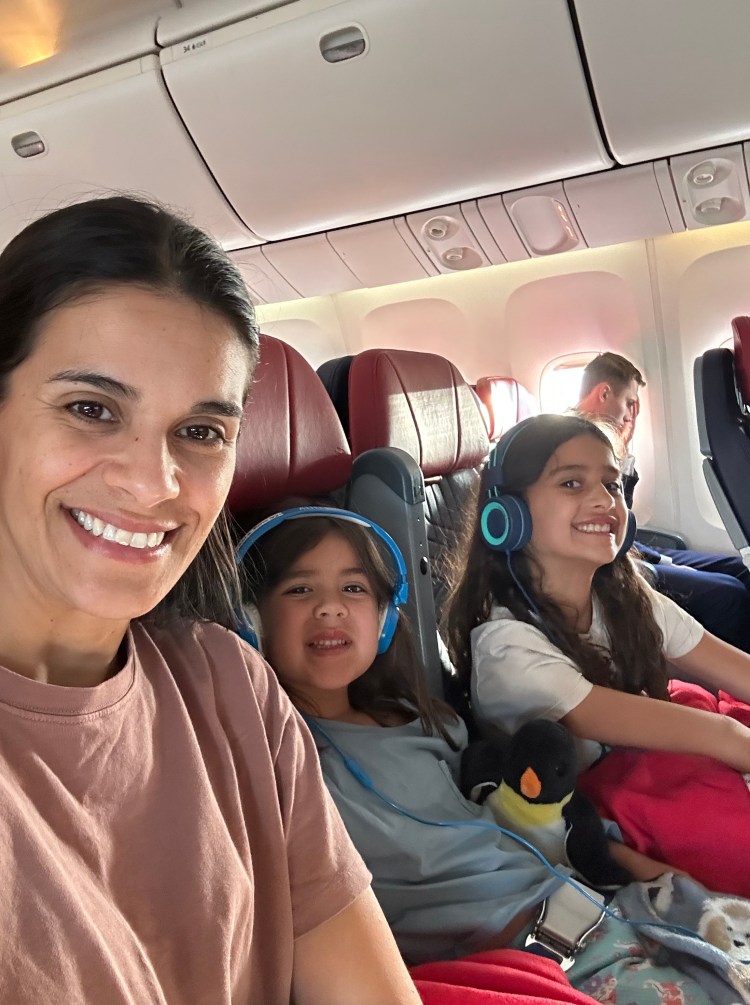
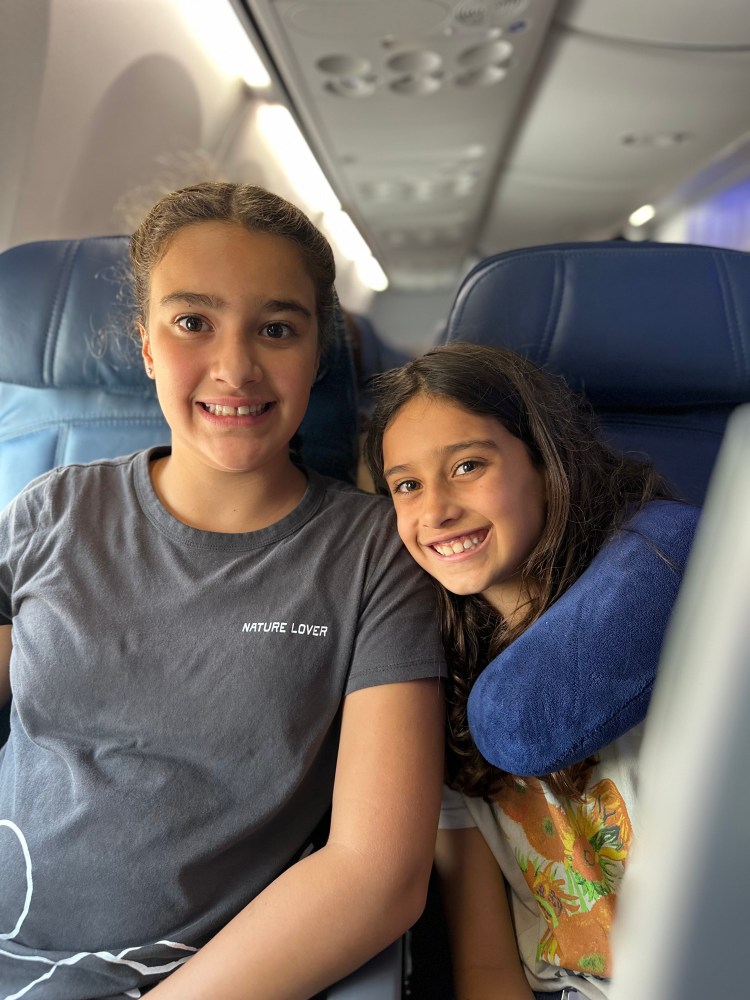
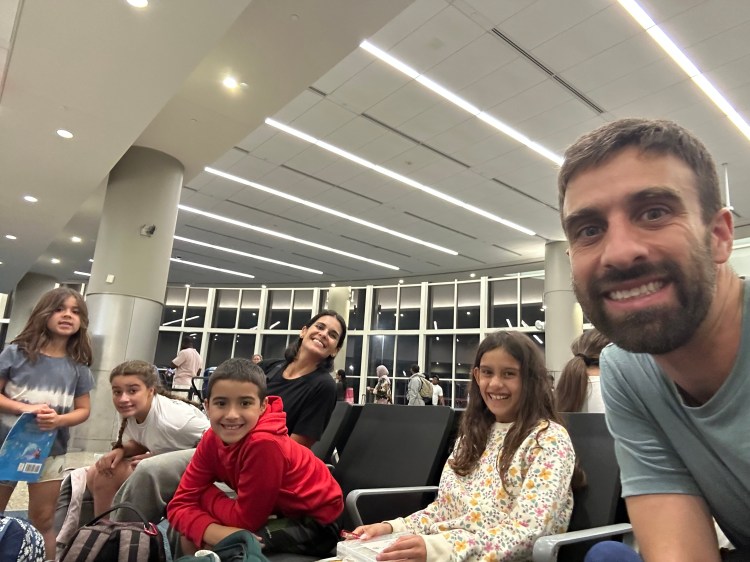
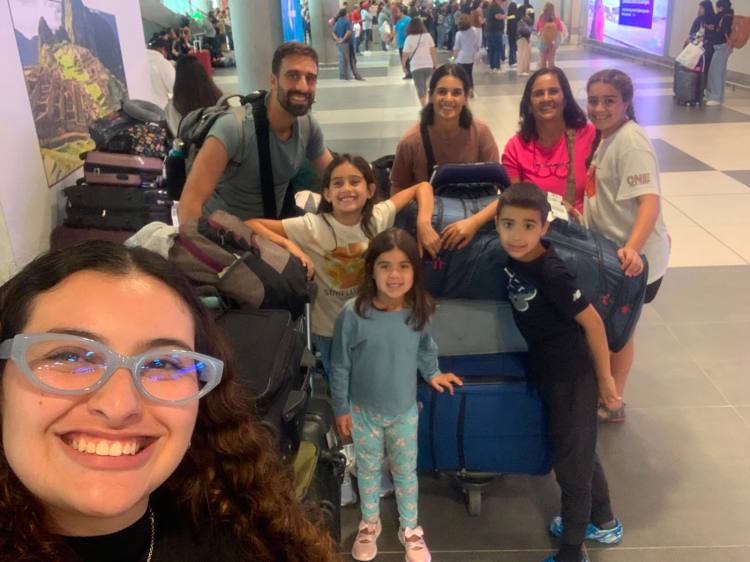
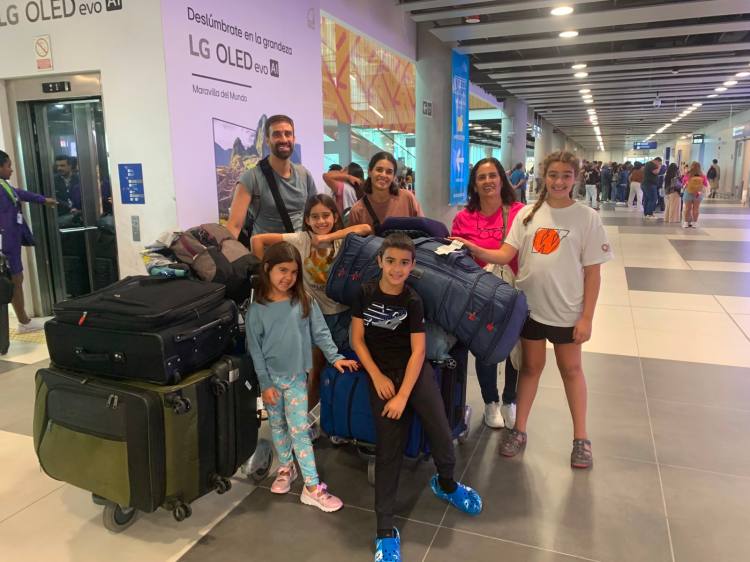
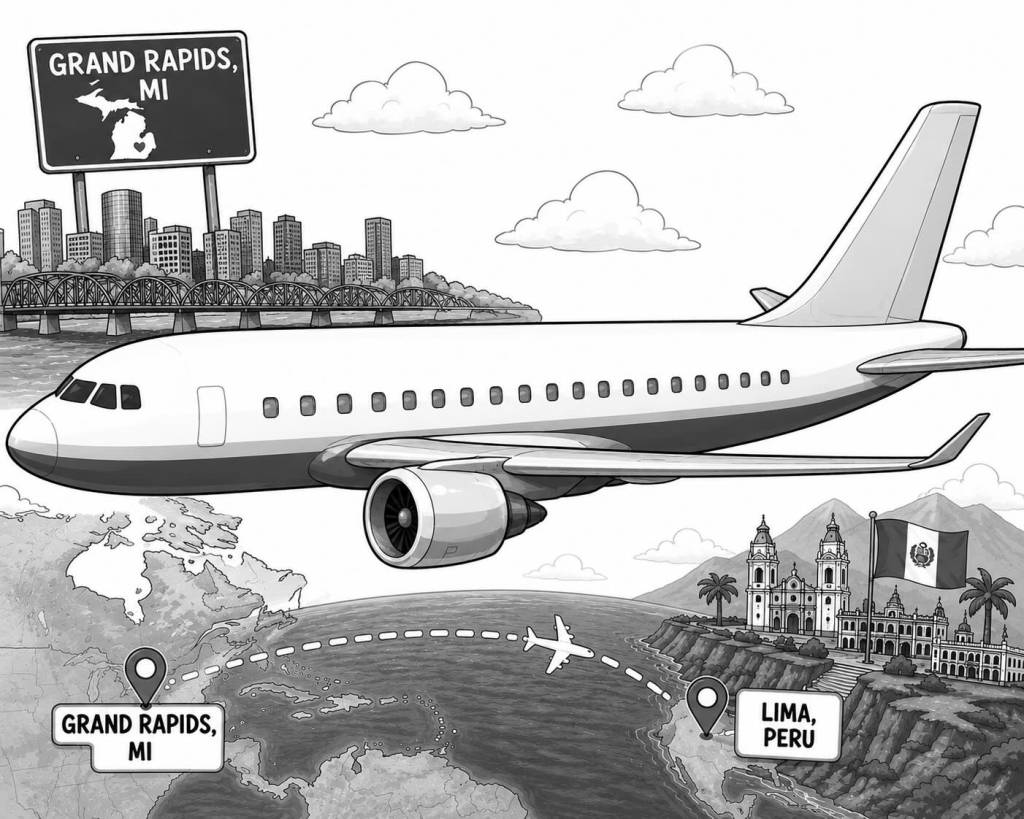
I write these words from the guest house that will serve as our home for the next month in Lima, Peru. Yesterday, August 11, we completed a few last-minute tasks, finished packing, made sure our bags were under the required weight, and drove to the airport. After some confusion at the front desk which almost resulted in a rescheduled trip, two flight delays, and one hour taxying around ATL airport, we arrived in Lima along with most of our bags (the rest have since arrived)!
As Adriana and I talked throughout the trip, making sure we got through every checkpoint, it kept hitting us that each delay made the trip more doable. The delay in Grand Rapids gave the front desk people enough time to figure out how to resolve the confusion (it took over an hour). We could not wait to get off the plane in ATL, but once we did, our wait was quite short for the next flight. The Lord was with us!
As we close a long and beautiful season in the US, many emotions fill our hearts. Leaving friends and family hurts! Beginning a new life excites us. Driving down the streets of Grand Rapids for the last time fills us with nostalgia.
Perhaps more than anything else, we are thankful!
Thanks, family! You have loved us well! These last two years living close have been a true treasure. We will miss you!
Thanks, friends! You made leaving Grand Rapids hard! The pain reminds us of all the sweet time that we enjoyed together.
Thanks, Redemption City Church! You have been a family, a source of encouragement, a home.
Thanks, supporting churches and individual supporters! Your support and investment in us and in our ministry means so much. We feel honored and humbled to count you as brothers and sisters and teammates. We could not be here without you! We feel God’s love and care through your sacrificial gifts.
Thank you, Lord! You have provided above and beyond in countless ways such that we are full of joy and love!
August 25, 2026 — Two weeks in…
Today marks two weeks since we departed from Grand Rapids for Lima, Peru. The time has flown… and at times crawled. We’ve been busy working on the logistics of beginning life in a new place—getting phone lines, setting up banking, looking for a more permanent abode, looking for a car.
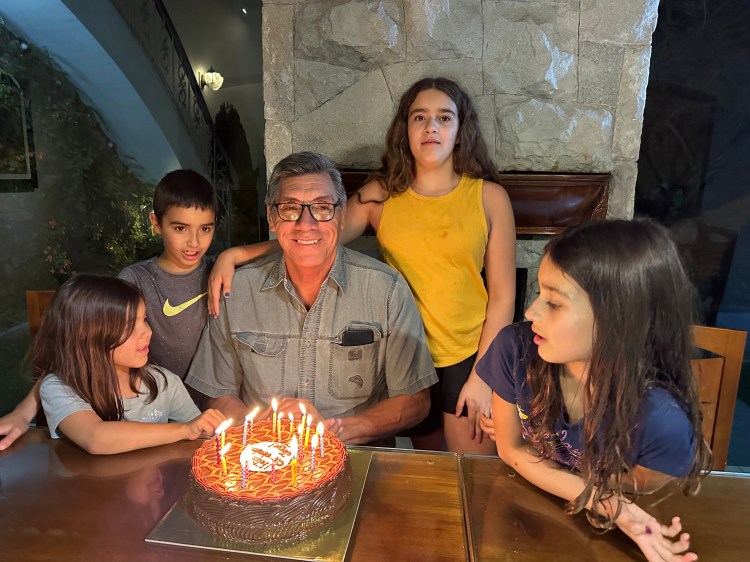
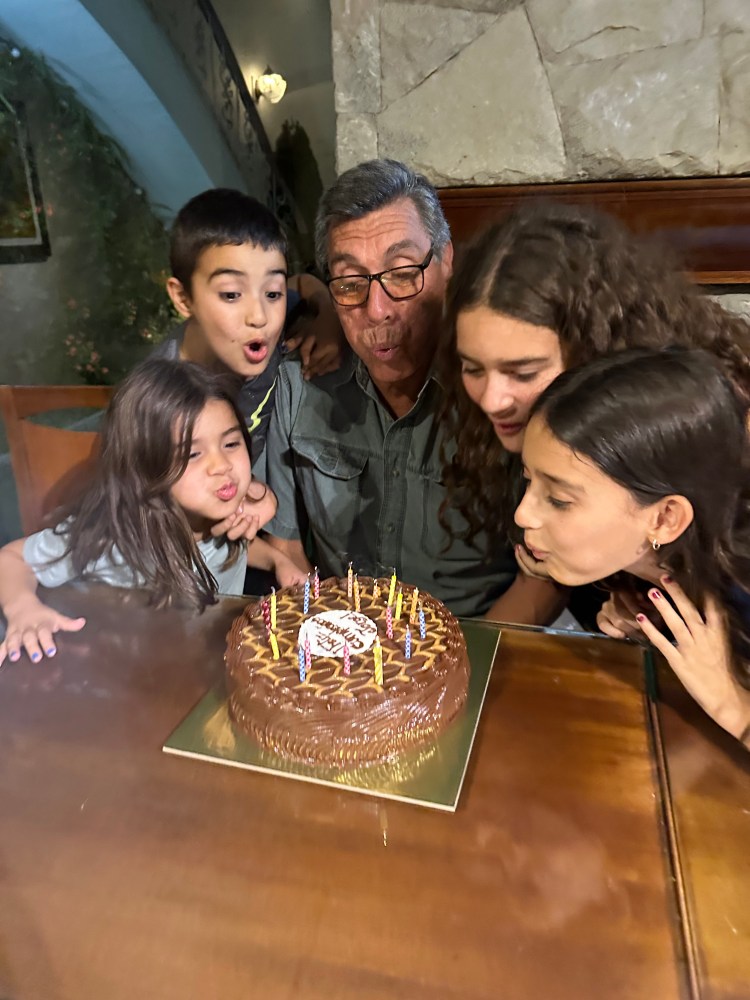
We’ve also spent time with family and friends. Adriana’s Dad had a birthday in early August. He was on a work trip by himself…not the best birthday celebration. So, this Saturday we celebrated with him in person. What an awesome privilege that we haven’t had the past 13 years.
Our first Sunday in Lima, we attended Esperanza Viva Evangelical Free Church. Adriana and I began serving at this church when it was a church plant about 21 years ago. We were teenagers. We also attended and served there for several years after we got married. We enjoyed reconnecting with many friends!
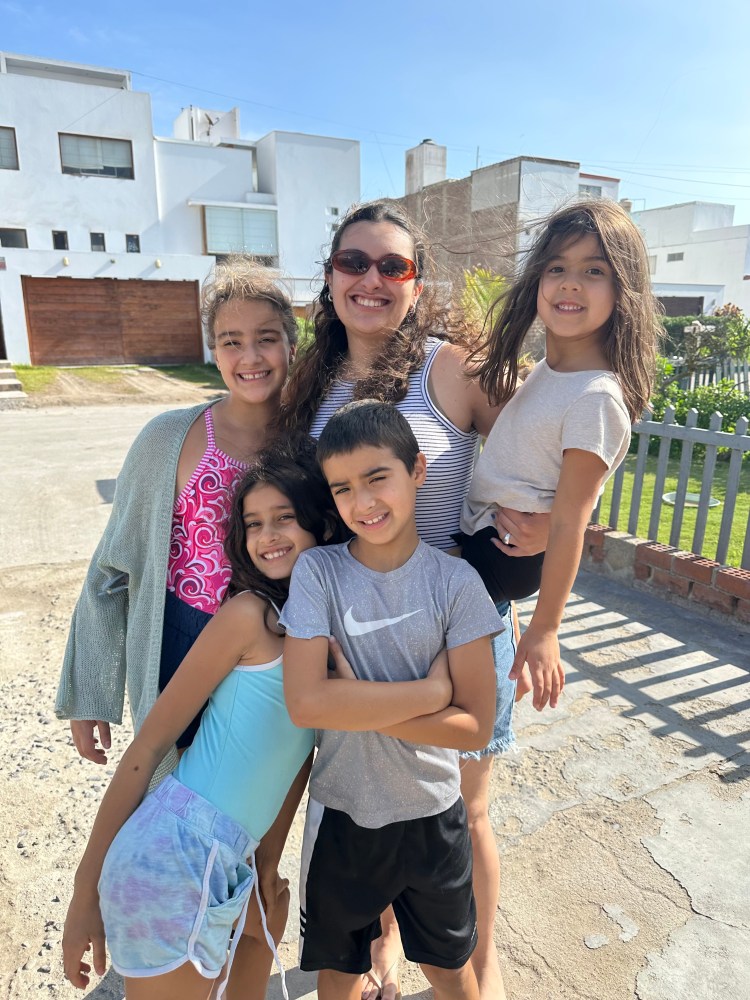
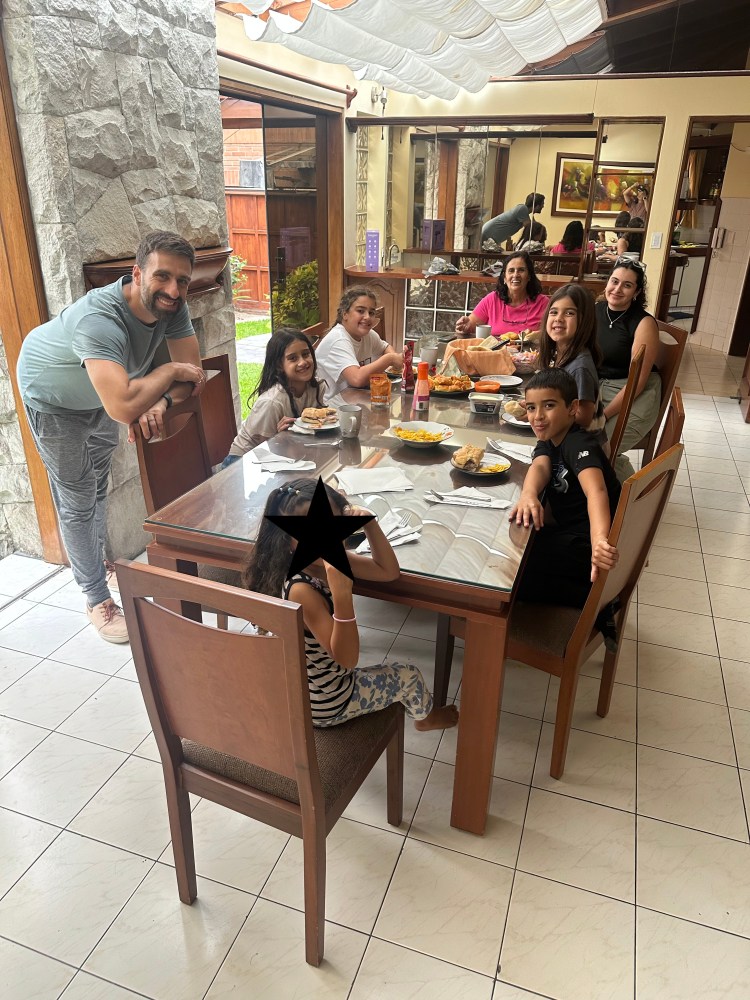
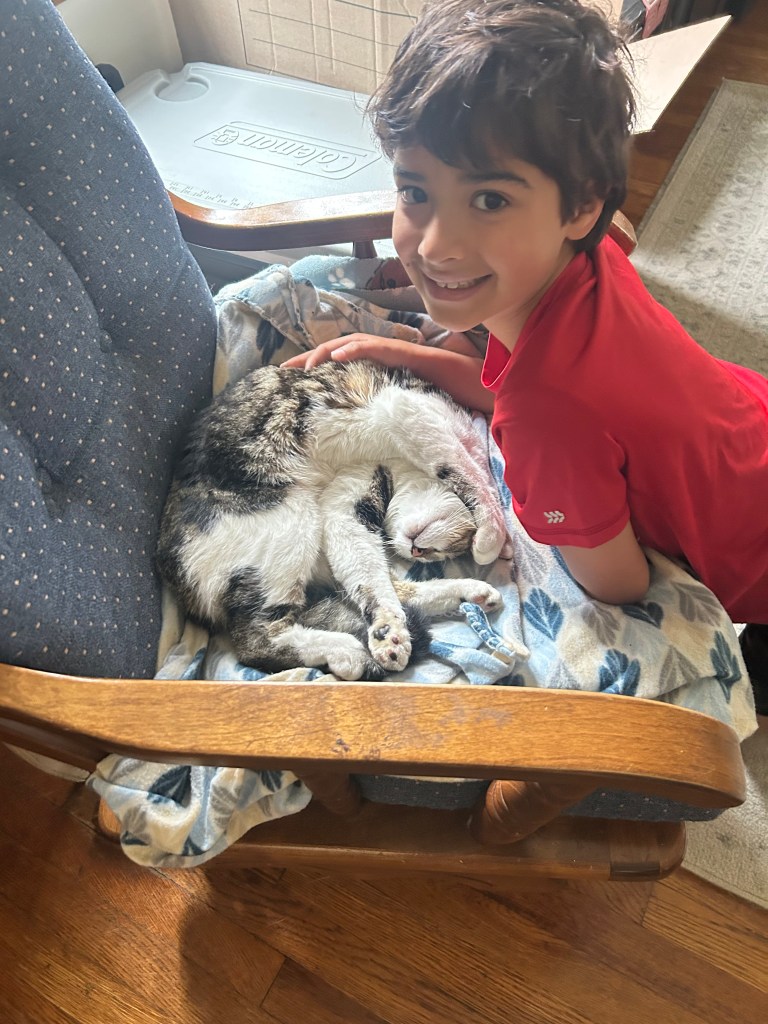
The kids are enjoying themselves and doing well overall. They love spending time with their tías, prima, and abuelos. They like going to the market and are dying to go on a bus.
This period of transition has many joys and frustrations. I’m anxious to start work, and I have a couple of meetings this week. At the same time, our family needs to settle in and find a bit of stability. This will remain the priority for the next few weeks.
Looking ahead:
Adriana will begin homeschooling the kids sometime in September. She will continue to do so through at least the end of 2026. The Peruvian academic year begins in March, and the current plan is for the kids to begin attending school in 2027.
I begin teaching in the second half of September. My first course will be on the poetical books (Job, Psalms, Proverbs, Ecclesiastes, Songs).
Please pray:
For health. Everyone has gotten sick with stomach issues except me. Thankfully none of the illnesses have been too serious.
For patience and wisdom as we make many big decisions.
For a home and a car.
For wisdom and guidance as we look for a church home.
With great excitement and a dash of trepidation, we clicked “process payment,” purchasing one-way tickets to Lima, Peru a few weeks ago. We leave on August 11, twenty-one days from today. This means that we have reached key financial milestones such that our sending agency has given us a green light to move forward! While a few financial uncertainties remain, we find ourselves in a solid spot!
A flurry of activity enveloped the past 40 days since our last post. I turned 38. We enjoyed a fun and meaningful reunion with our extended family on my mother’s side. Isaia celebrated his 8th birthday with a sports-filled party with friends and family. We said a tearful goodbye to our rodent-eliminating, fetch-playing, sweet cat, Killari, leaving her at her new home—a friend of Ilana. We bid farewell to my brother, landlord, and neighbor of the past two years as he and his family moved across the country—we will be forever grateful for the gift of living close to them during this season. Aila had three swim meets and did an exceptional job breaking multiple personal records. We boxed up, threw away, or donated all but a couple suitcases of belongings for each of us. We moved out of our home and in with family.
We find ourselves in the “homeless” phase of our transition. While true-ish, we really are far from homeless. God has blessed us immensely with parents, siblings, and friends that have supported us in countless ways. We have the privilege of living as guests of those we hold dear until we depart. God is good!
In Psalm 90, the pray-er says,
1 My Lord, you have been a safe place for us From generation to generation 2 Before the mountains were born Or you birthed the earth and world From ever and to ever you are God
We have experienced God as a safe place during this time of transition. The past three weeks, I preached at three different supporting churches. At each church, we found kindred spirits, people who so believe in the mission that God has for us that they willingly give sacrificially to support us in this work. Your support, encouragement, and care for us are a tangible expression of God’s love.
These final twenty-one days will be full of emotion. We pray the psalmist’s prayer. May God’s love so satisfy us and those to whom we say goodbye that tears of sadness would express a deep joy—not the joy of separation but a joyful thankfulness for the times of fun and happiness that we shared and for the bonds that stand strong despite distance.
May we sense the Lord’s favor on us as we go and as our friends and family stay here. Even though our lives are short, and we are relatively insignificant in the big scope of things, may our work mean something in the kingdom of God. May God use our efforts for the glory of Jesus!
90:14 Satisfy us in the morning with your love, That we might sing and rejoice in all of our days!
90:17 May the favor of the Lord our God be on us May the work of your hands be established on us May the work of your hands, be established it.
In the next couple of weeks, we are reasonably confident that we’ll be able to buy tickets to Peru! We’d like to move in early August. This will allow Aila to celebrate her end-of-July birthday in Grand Rapids with friends and family. The exact date of our departure will depend on the airline ticket prices once we get the green light from Mesa Global, our sending organization.
These final two months of life in the US are:
A time of great joy! August 4th will mark thirteen years since Adriana and I moved from Lima, Peru to the US. We finally make our way back to do what we feel God has for us to do.
A time of great sadness! We leave friends and family who we love dearly and who have made the US home.
A time with too much to do! We’re trying to balance packing, spending time with friends and family, meeting with potential ministry partners, an assortment of academic and ministerial tasks, and defining details related to the move.
Please pray that God would give us strength, perseverance, and wisdom!
Here are some family highlights from the last two months:
April
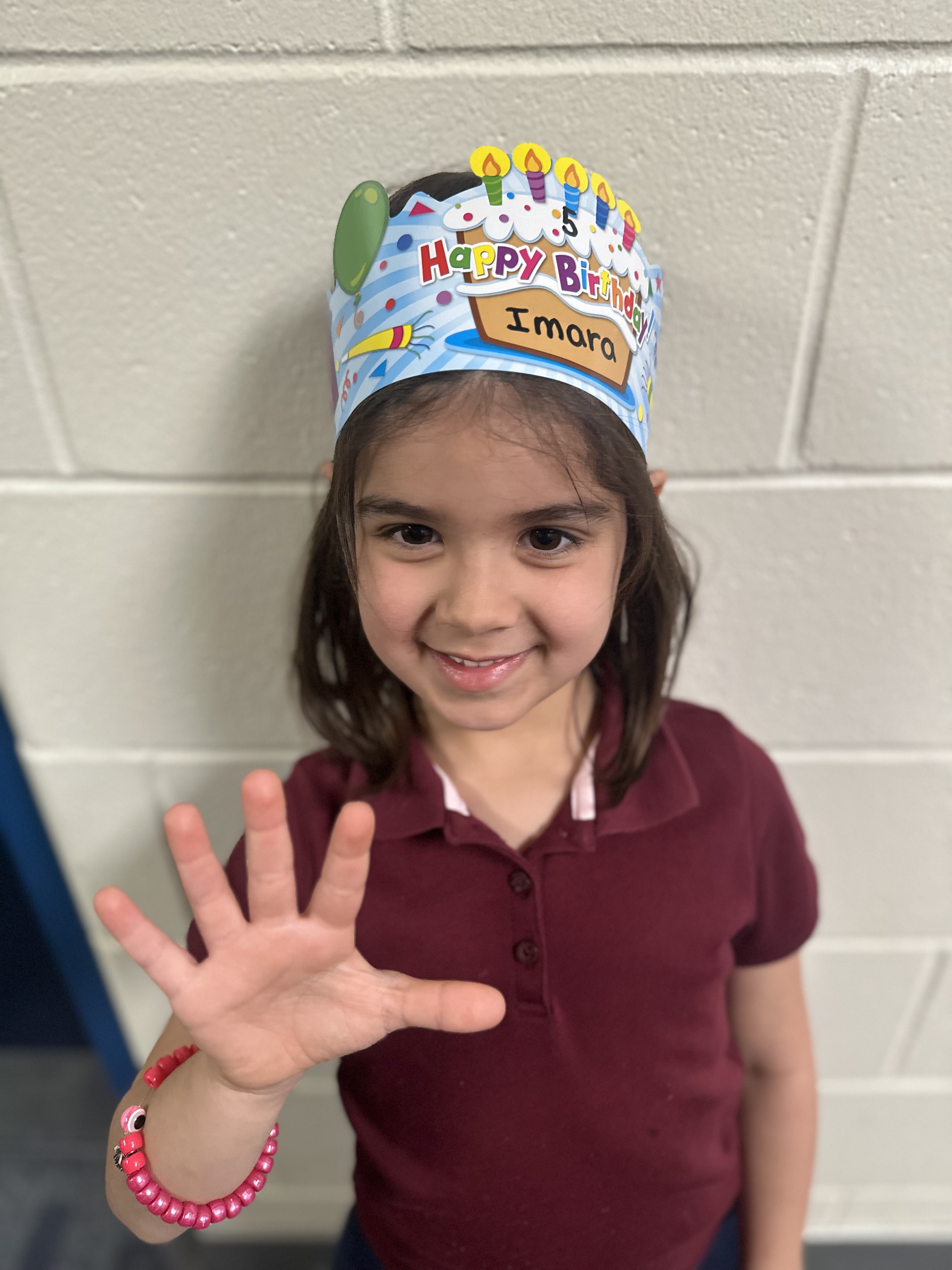
Our baby, Imara, turned 5! When we moved from Grand Rapids to Wheaton, she was only four-months old. Now a fivenager in all the best, most hilarious and some of the more difficult ways, Adriana and I could not be more thankful for her and her cheerful, energetic personality.
We spent a week in North Carolina at a Spiritual Formation retreat and training required by Mesa Global. This gave us much needed to time to reflect on God’s faithfulness and goodness and the many ways we need to turn to God for grace. We also met other Mesa missionaries who encouraged us in our calling.
May
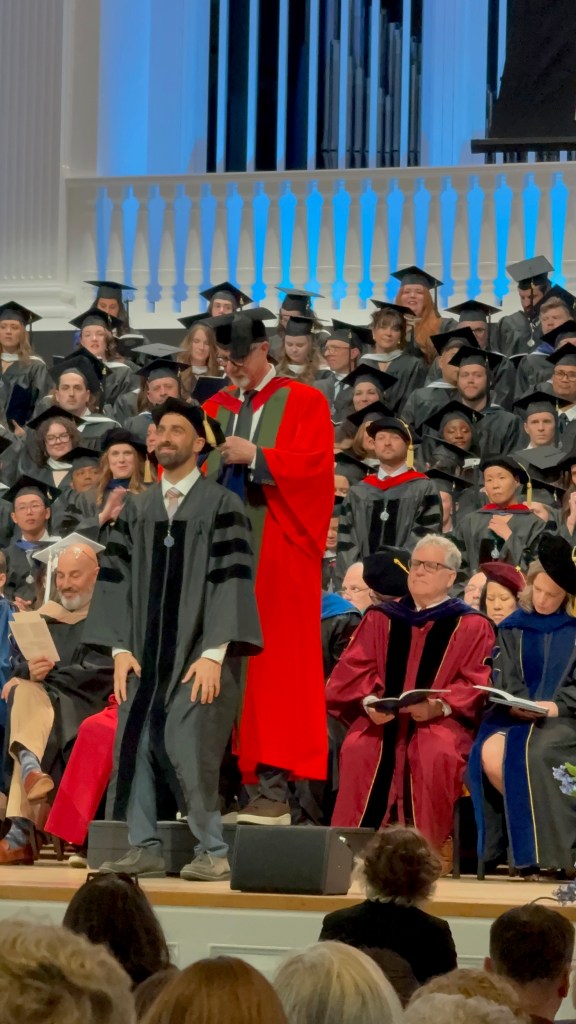
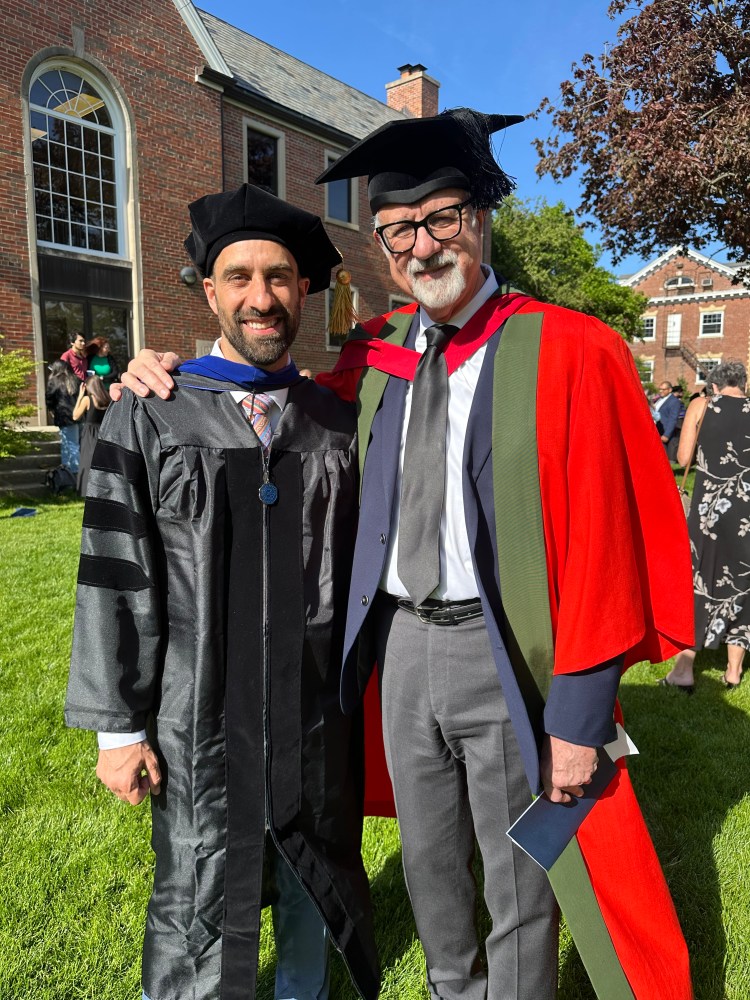
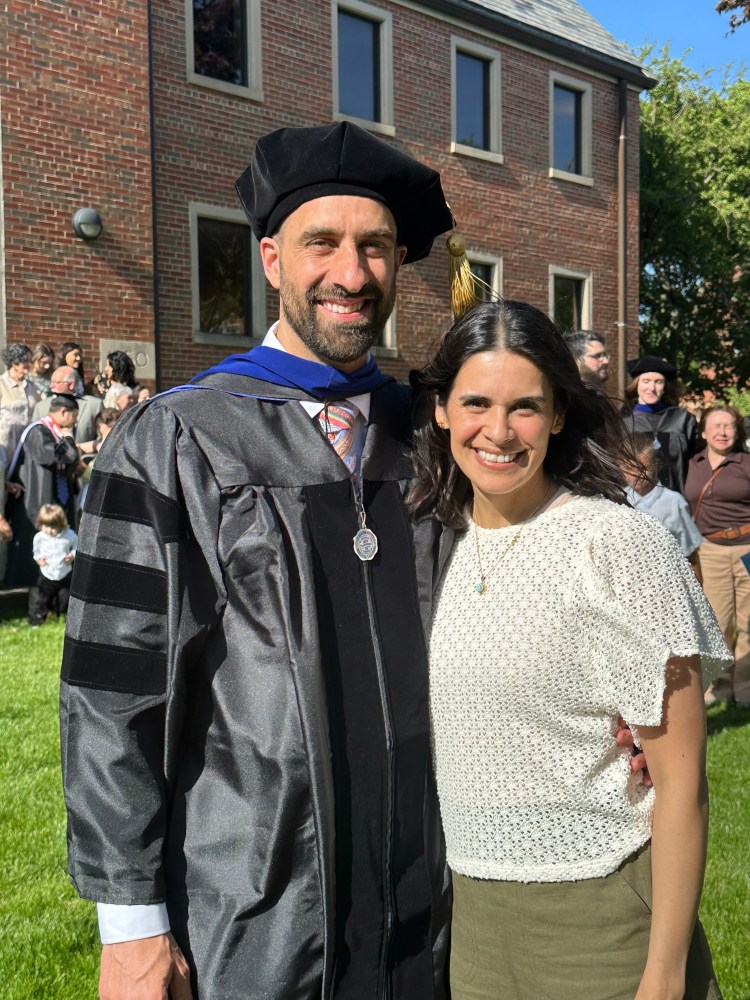
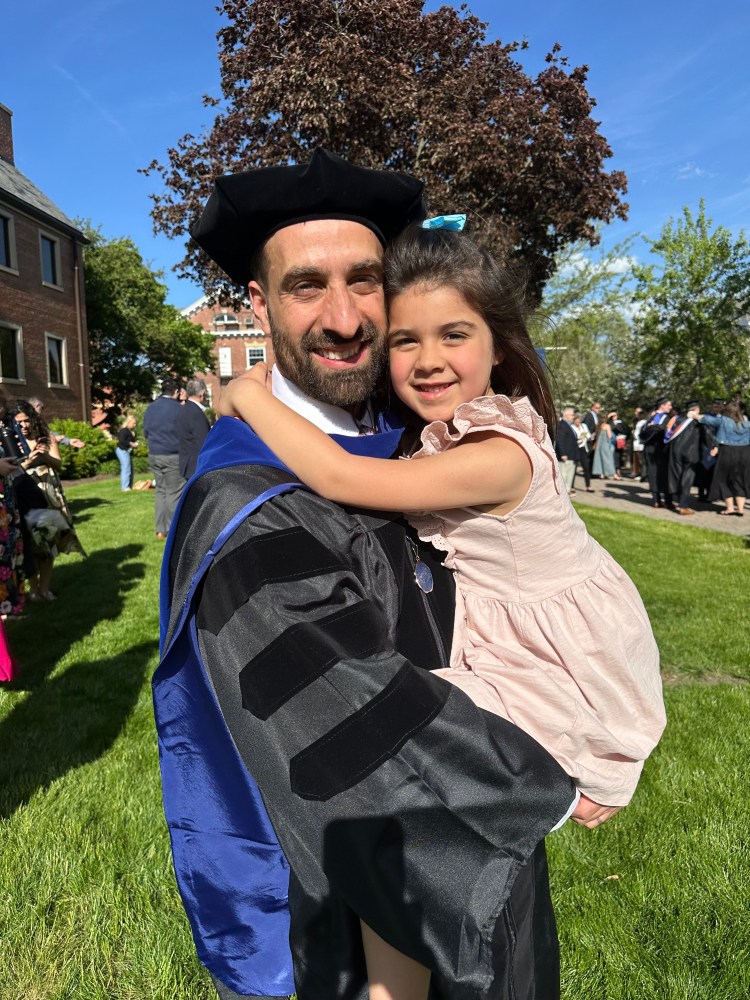
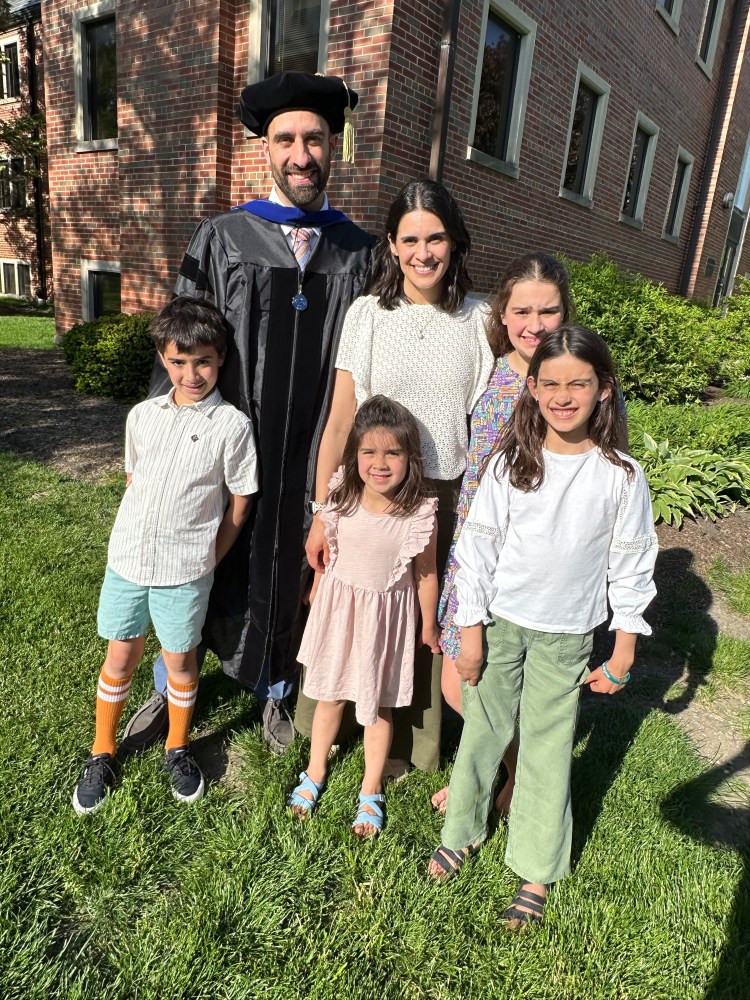
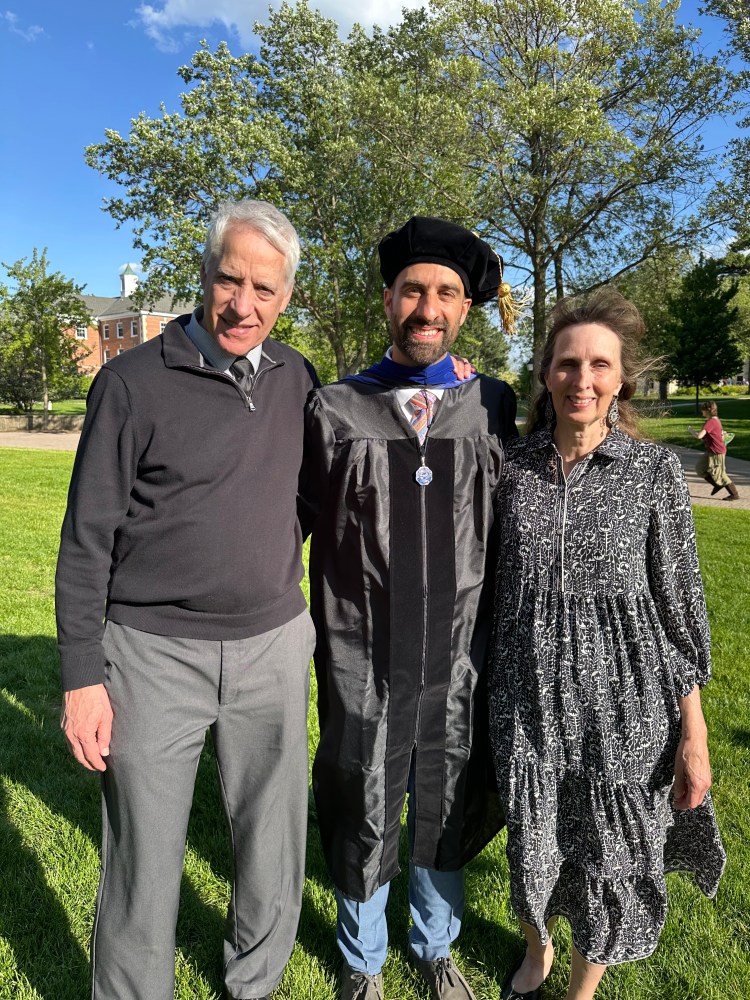
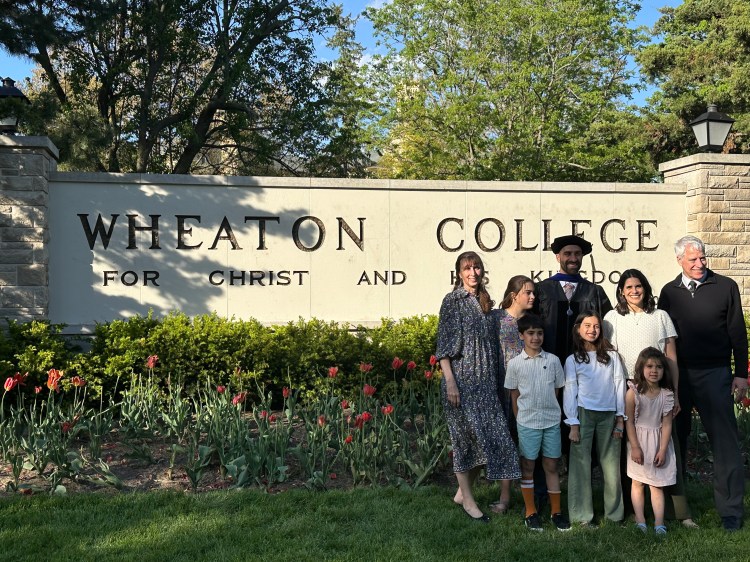
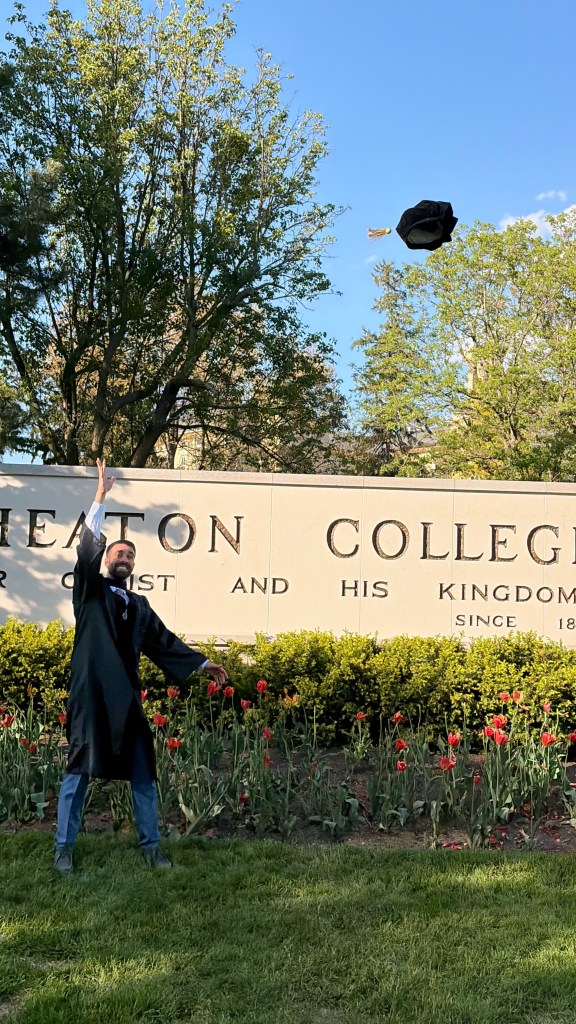
We travelled to Wheaton College for my graduation. Thank you, Jesus, for your faithfulness throughout the PhD journey.
We visited the church in Illinois where we served on staff for three years. Excitement filled our car on the way to see our All People’s Fellowship family, and many warm hugs welcomed us. When the first Christians in the early church called each other “brothers and sisters,” they were not joking! God’s family is truly a family.
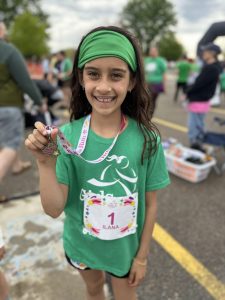
Ilana ran her first 5k as a part of an after school program called “Girls on the Run.” She did a fantastic job, running the entire time.
We had a big garage sale to purge many of the things that we will not bring with us to Peru.
June
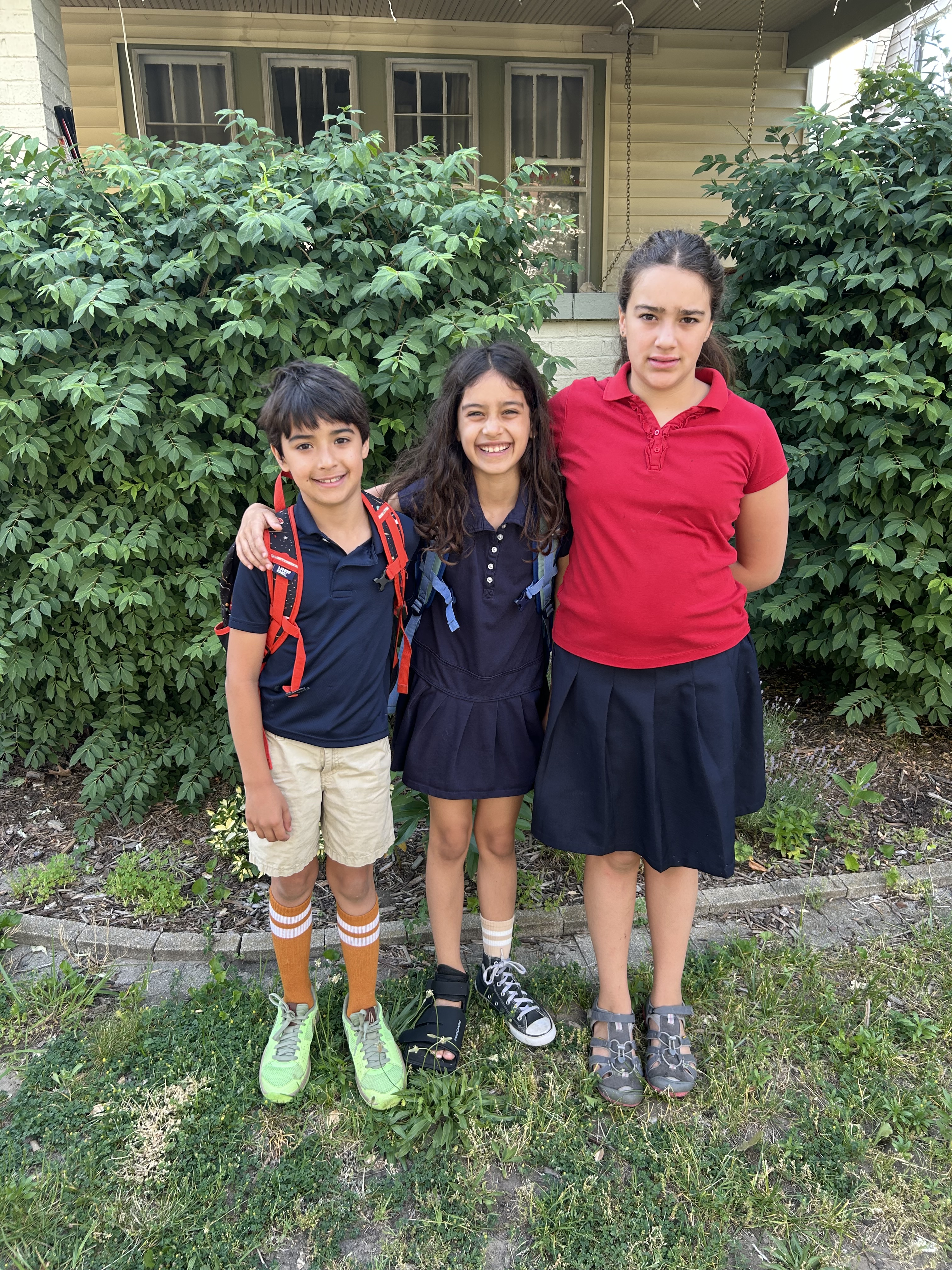
Our kids ended their second and final year at The Potter’s House. We’re thankful that God opened the doors for us to be part of this sweet community where our kids grew academically and spiritually and made great friends.
Please Pray
That God would give us strength, perseverance, and wisdom for our transition from GR to Peru.
For unity and understanding amidst the stress.
That God would continue to provide as the remaining support comes in.
Why Theological Education?
I began this mini-series to explain why my family’s ministry focuses intently on formal theological education (TE). I’ve said that TE is training in things related to God, and it takes a variety of forms—from Bible studies to sermons to seminary degree programs. Formal TE seeks to equip ministry leaders, those who teach and preach and carry a burden of responsibility for the people of God. TE should be integral (addressing the whole person with an eye towards all of life) and formational (moving people towards conformity with Jesus). My aim as a theological educator is to help people know God more deeply and fully so they see the world from God’s perspective and live in the world according to God’s design.
Thus far, I’ve tried to make the case that TE is central to the mission of the church. In the “great commission,” Jesus commanded his followers to do the work of TE: “teaching them to obey everything I have commanded you” (Matthew 28:20). The rest of the NT echoes this command, and the early church took it to heart as “they devoted themselves to the apostles’ teaching…” (Acts 2:42). The church cannot see TE as an optional “add-on” to evangelism or a take-it-or-leave-it supplement to the “real” or “more important” work. Faithfulness to Jesus requires that the church do TE. Yet, this work is not without perils!
Why theological education?
Reason #4: teachers have a dangerous job!
In the sermon on the mount, Jesus anticipates a problematic response to his ministry. Given the authority with which he speaks and the depth of his wisdom, some might mistakenly think that his teaching replaces the teachings of the Old Testament. “No! No! No!” Jesus says, “Do not think that I have come to abolish the Law or the Prophets…” (Matthew 5:17). “Law” and “Prophets” refers to the first two of three sections of Israel’s Scriptures (the third is called the “Writings” or sometimes “Psalms”). Jesus came to fulfill the OT. He exemplifies how to live in full accordance with God’s teaching, putting on display an abundant life in perfect relationship with the Father. Jesus presents himself not as a replacement of the Law but as its ultimate interpreter and embodiment. And those that follow in his footsteps, well they better follow in his footsteps! After all, “anyone who sets aside one of the least of these commands and teaches others accordingly will be called least in the kingdom of heaven, but whoever practices and teaches these commands will be called great in the kingdom of heaven” (Matthew 5:19).
Teachers face a tall task! They must interpret,* appropriate, and communicate God’s instruction in changing times and contexts. When they do this poorly, whenthey lessen the demandsof God’s kingdom, setting aside Jesus’ commands and teaching others to do the same, they suffer the consequences. They’re called “least” in God’s kingdom. I don’t know exactly what that means, but it is not good!
*Reading always is interpretation; note how Jesus says “you have heard…and I say” throughout the sermon on the mount.
Yet, it’s no safer to increase the demands! Paul warned about those that judge others based on what they eat and drink and their religious celebrations; he talked about those that make extra rules and commands that “indeed have an appearance of wisdom…but they lack any value in restraining sensual indulgence” (Colossians 2:16–23). Jesus criticized the Pharisees for making heavy burdens for the people (Matthew 23:1–4) in contrast to Jesus’ light burden (Matthew 11:28–30). No, establishing rules and requirements that add on to Jesus’ commands will not do.
Navigating life in Christian freedom requires discernment, humility, the enlightening power of the Holy Spirit, and guidance! Teachers, those that offer guidance to others, have a responsibility to do this well because they wield a dangerous power: the power of the tongue. James warns would-be teachers to think twice about this vocation because “we who teach will be judged more strictly” (James 3:1)! He then describes how the tongue, though small, “is fire, a world of evil among the parts of the body” (James 3:6). An impetuous, careless, or manipulative word can set a person’s life on fire.
Teachers must bear this responsibility with fear, trembling, and boldness. They must speak the truth confidently, guiding people towards the Lord. They must speak with humility because when they err, and they will do so, they can do loads of damage to others and to their own souls—the Lord will judge them! Leaders must care for God’s flock with love and gentleness, wisdom and perception, and with a recognition that they serve the Lord and the Lord’s people, not themselves!
As Hebrew 13:17 says, leaders “keep watch over you [their flock] as those who must give an account.” Church leaders have a dangerous task. God holds them responsible for the way they care for God’s people. By virtue of their role, they wield significant power. And they must seek to empower people to live faithful lives in Christian freedom, giving way to neither license nor piling on unnecessary demands.
So, why theological education?
Because theological education aids preachers, teachers, and leaders in their dangerous task! Through formal training, people learn to interpret God’s word, come to know God’s character more fully, and reflect on how to embody God’s teaching so that they can communicate God’s word faithfully and guide others as they follow Jesus.
Before diving into reasons #2 and #3 that my family’s ministry focuses on theological education, a quick support update and some prayer requests. Next week I’ll provide a more thorough family update.
Ministry Partner Tracker
Monthly support pledged
≈82% of goal
We plan on departing for Lima this summer! We need to reach 100% of our monthly budget—this is required by our sending organization—in order to do move. We have to move out of our house at the end of June. After that we will be “homeless,” living with family until we are able to make the move to Peru.
Please Pray
That we’d be able to shield our kids from some of the stress of the move so that they can enjoy precious time with friends an family.
That we’d be able to raise the final 18% of our monthly budget soon.
That God would give us wisdom and patience in this time of transition.
In this mini-series of blogs, I’m arguing that the church in the west has a particular opportunity and responsibility to prioritize theological education in missions. I started by answering the question “what is theological education?” Then I gave the first of ten reasons that TE is important and will be the focus of my family’s ministry:
Reason #1: Jesus tells his followers to teach new disciples all that he commanded.
Below I share the the next two reasons.
Reason #2: The NT echoes Jesus’ call to teach “the whole will of God.”
The book of Acts describes the growth of the early church. At the beginning, a group of around 120 believers—a tiny crew considering the types of crowds Jesus used to gather (e.g., the feeding of the 5000 in Luke 9:10–17)—huddled together, waiting and praying (Acts 1:14–15).
By the end of Acts, the Holy Spirit had captured the hearts and transformed the lives of thousands upon thousands in cities all over the known world. The good news of God’s work in Jesus had travelled from Jerusalem to Rome, the capital of the empire with seemingly unstoppable power. And from Rome, Paul spoke of a different kingdom; he “proclaimed the kingdom of God and taught about the Lord Jesus Christ—with all boldness and without hindrance” (Acts 28:31).
The second half of Acts focuses on Paul’s ministry. Wherever he travelled, he followed a similar trajectory. He would find a Jewish synagogue or gathering place. Then he would tell the story of the whole world highlighting how God’s action climaxes in the person of Jesus who brings salvation (Acts 13:13–41; 17:1–4; see also 17:22–31). Then he would stick around to share the good news with more people and to teach the ways of Jesus (Acts 14:21–22; 17:10–12; 18:4, 11). Sometimes he would only stay for a short period, often because people would be so angry at the implications of his teaching that they would drive him out of town. In other places, like Corinth (1.5 years; Acts 18:11) and Ephesus (3 years; Acts 20:31), he taught for extended periods of time.
Paul was not content to give a gospel presentation and move on. Rather, following Jesus’ example, he taught “the whole will of God,” as he says to the Ephesian elders (Acts 20:27). And his teaching and witness disrupted ways of life! In the name of Jesus, Paul healed people from sicknesses (Acts 14:3, 8–10). Local economies changed drastically (e.g., Acts 16:16–21) and people spent money differently (Acts 19:17–27). He addressed sexuality (1 Cor 6:12–20), discrimination (Gal 2:11–21; Eph 2), relational strife (Phil 4:2–3), pride and humility (Phil 2:1–11), wisdom (1 Cor 1:18–2:16; 8:1–13; Col 2:16–23), love (Rom 12:9; 1 Cor 13), sin (Rom 3:9–10) generosity (Rom 12:13; 2 Cor 9:6–15), the Lord’s Supper (1 Cor 12:17–34), blessings in Christ (Eph 1:3–14) and much, much more.
This same emphasis on teaching recurs throughout the NT. It becomes clear that for the early church, leaders had an important responsibility to teach and to contend for the truth to help the church remain faithful to Jesus. The frequent commands to this end assume that it will not be easy. A few examples demonstrate this:
Paul tells Titus that he left him in Crete so that he could appoint elders. These individuals must be of high character. They must also “hold firmly to the trustworthy message as it has been taught, so that he can encourage others by sound doctrine and refute those who oppose it” (Tit 1:9). See also 1 Tim 1:3–7.
Jude encourages believers to “contend for the faith that was once for all entrusted to god’s holy people” (Jude 1:3). In so doing, they must resist people who at best misunderstand and at worse pervert God’s grace.
Peter writes to “remind you of these things, even though you know them and are firmly established in the truth you now have” (2 Pet 1:12). Once again, teaching helps keep God’s people firmly rooted in Jesus’ teaching and equips them to resist “destructive heresies” and “fabricated stories” (2 Pet 2). See also 1 Tim 6:3–5; 2 Tim 14–3:9; 2 John.
Of course, all this builds on a host of OT passages that call the people of God to remember what God had done and to pass on his teaching. Perhaps the most famous example comes in Deut 6:4–9:
4 Hear, O Israel: The Lord our God, the Lord is one. 5 Love the Lord your God with all your heart and with all your soul and with all your strength. 6 These commandments that I give you today are to be on your hearts. 7 Impress them on your children. Talk about them when you sit at home and when you walk along the road, when you lie down and when you get up. 8 Tie them as symbols on your hands and bind them on your foreheads. 9 Write them on the doorframes of your houses and on your gates.
And the early church did just this! So…
Reason #3: The early church devoted itself to the apostles’ teaching (Acts 2:42).
They yearned to learn the ways of God and live according to God’s design. So, they sought instruction from Jesus’ disciples, and this instruction transformed their lives:
They spent lots of time together, becoming brothers and sisters, praying, eating, rejoicing.
They remembered and proclaimed Jesus’ sacrificial death by celebrating the Lord’s Supper frequently.
They used their personal possessions to care for the needs of other Christians. That is, they saw their things not as their own!
And through this small group of people who sought to live according to the teaching of the apostles who taught what Jesus commanded, the kingdom of God became visible.
So, why theological education?
Well, not only did the risen Jesus Christ tell his disciples to pass on his teaching, but the rest of the NT echoes this and the apostles’ teaching became the foundation of the early church (Eph 2:20).
“All authority in heaven and on earth has been given to me. Go therefore and make disciples of all nations, baptizing them in the name of the Father and of the Son and of the Holy Spirit, teaching them to observe all that I have commanded you. And behold, I am with you always, to the end of the age.
Jesus sends his disciples into the world to make more disciples, followers who walk in his ways. Jesus emphasizes two things that his disciples must do: baptizeand teach. Baptism welcomes new disciples into the family of God. Teaching inculcates what it means to live as part of the family of God.
Interestingly, Jesus did not command them to just share the good news. He tells his disciples to teach “them to observe ALL that I have commanded.”
What did Jesus command? In the gospels, Jesus’ teaching covers every area of life:
what God values (e.g., Matt 5:3–12; Luke 9:57–62)
finances (e.g., Matt 6:19–34; Mark 10:17–31; Luke 12:13–21)
marriage (e.g., Matt 5:27–32)
worship (e.g., John 4:21–24)
friendship (e.g., John 15:9–17)
emotions (Matt 6:25–34; Luke 6:27–36; 10:25–37; 12:4–7)
conflict (Matt 5:21–26; Luke 17:1–4)
politics (e.g., Luke 20:20–26)
not to mention that salvation comes through him alone (e.g., John14:5–14; 20:30–31)
that he came to save the lost (e.g., Luke 19:10)
But that’s not all, Jesus drew on the authority of the Old Testament, and the rest of the New Testament draws its authority from Jesus’ teaching. So, the whole Bible fits under the umbrella of Jesus’ teaching, and Jesus’ teaching, which, remember, he tells his followers to pass on, covers every area of our lives and tells us who God is and what God is like.
Now, teaching is not simply filling the student’s head with facts. In the Bible, knowing almost never refers simply to apprehension of facts. Here Jesus says: “teach them toobserve.” In other words, teaching is intimately connected to action. Until observance follows, the task of teaching remains necessary.
The goal of biblical teaching is not for the student to memorize the attributes of God, or the ten commandments, or any other conglomeration of facts. The goal is what we might call knowing. This word shows up all over the place throughout the entire Bible (20x in Hosea!!!).
Biblical knowing is only achieved when the student externalizes that which is known in embodied actions. There can be no separation between the head and the heart, between the mind and body. Teaching is not teaching and knowing is not knowing until head and heart, mind and body, cognition, emotion, and embodied action are all engaged.
Thus, the teaching that Jesus describes engages the whole of the human person. It encompasses every area of life because God cares about it all. What is this if not theological education? Do you see why this is important? It’s not just for professors or seminarians or pastors or ministry leaders. This is the Christian walk.
Biblical knowing is only achieved when the student externalizes that which is known in embodied actions.
That is why, as a theological educator, my aim is to help people know God more deeply and fully so that they see the world from God’s perspective and live in the world according to God’s design.
The church’s task to teach them to observe all that I have commandedis no small endeavor. No individual can do it on their own. But that is not surprising! After all, Jesus gave this command to the disciples collectively and promised “I am with you always!” Jesus’ continued presence became quite apparent as Jesus built his church through the disciples’ ministry (see the book of Acts).
So, why theological education?
Reason #1: The risen Christ told his disciples to make disciples, and a core part of this task is ongoing theological education.
I often hear this question when sharing about my family’s ministry.
Why not evangelism? Church planting? Isn’t saving souls more important? Why not mercy ministries? Business as mission? Many people live in poverty!
These are great questions! I believe that the church should be engaged in each of these tasks.
Life is all about making decisions. Choosing to do one thing means choosing not to do others. We all have limited resources—time, energy, money—and we must choose how best to invest what God has given us. For me, that means devoting my life to theological education (TE).
Over the next couple of months, I’m going to share 10 reasons why this is the case. I’ll argue that, while TE is always important, the church in the west has a particular opportunity and responsibility to prioritize theological education in missions. More personally, I’ll share why I owe this to the church in Peru.
But I don’t want to get ahead of myself. Today my task is simple. Before giving 10 answers to the question “why theological education?” I need to answer another question: what is theological education?
To be honest, I don’t like the term. It’s boring. It sounds too much like school, and it gives the impression that the theological educator imparts information to passive recipients (i.e., the student). But “theological education” is the term that is often used, and I don’t have a better one. So, what is it?
Defining each part gets us started. Education implies training or equipping, and theological indicates the realm of that training. Theological education is training in things related to God. When defined like this, we can say see that TE takes a variety of forms.
Informal TE includes things like a Saturday morning Bible study, a sermon, a discipleship meeting where you read Scripture, and theological podcasts and YouTube videos. Every Christian is involved in informal TE.
Formal TE take places at Bible colleges, seminaries and other educational institutions. These generally aim to train pastors and ministry leaders, people who carry the heavy burden of teaching and preaching God’s word.
My primary focus is formal TE. I want to strengthen the church by equipping leaders. As a theological educator, my aim is to help people know God more deeply and fully so that they see the world from God’s perspective and live in the world according to God’s design.
Two fundamental convictions concerning TE flow from this aim.
First, theological education must be integral.
My job as a theological educator is not to fill people’s heads with information. TE addresses the whole person: mind, emotions, actions.
In his letter to the church in Philippi, Paul prays
“...that your love may abound more and more in knowledge and depth of insight, so that you may be able to discern what is best and may be pure and blameless for the day of Christ, filled with the fruit of righteousness that comes through Jesus Christ—to the glory and praise of God” (Phil 1:9–11).
Paul wants the Philippians’ love (emotion) to grow more discerning, that they might know (mind) God more and make wise decisions (action) about how to live holy lives and therefore bring glory to God. TE must address the whole person!
Second, theological education must be formational.
The aim of TE is not intelligence. We seek transformation! In 2 Corinthians 3:7–18, Paul speaks of the Christian’s reality in Christ. He says that,
“We all, who with unveiled faces contemplate the Lord’s glory, are being transformed into his image with ever-increasing glory, which comes from the Lord, who is the Spirit.”
The Christian walk consists of continuous growth into the image of Christ (see also Ephesians 4:7–16). The Lord brings about this transformation. TE helps people gaze on Christ more truly and faithfully through God’s word and drawing on the deep resources of the Christian faith and tradition.
So, in some sense every Christian must seek theological education. At the same time, there is a special need for pastors and ministry leaders to pursue formal TE. Why? Come back next week for reason #1.
Ministry Partner Tracker
Monthly support pledged
≈ 75% of goal
We plan on departing for Lima this summer! We need to reach 100% of our monthly goal in order to do so.
Please Pray
That God would guide us through the many details of our transition back to Peru.
That we would have joy and peace as we close out this chapter of our life in the US.
That God open doors for us as we seek to raise the final 25% of our monthly budget.
Last week I passed my oral comprehensive exam and dissertation defense.
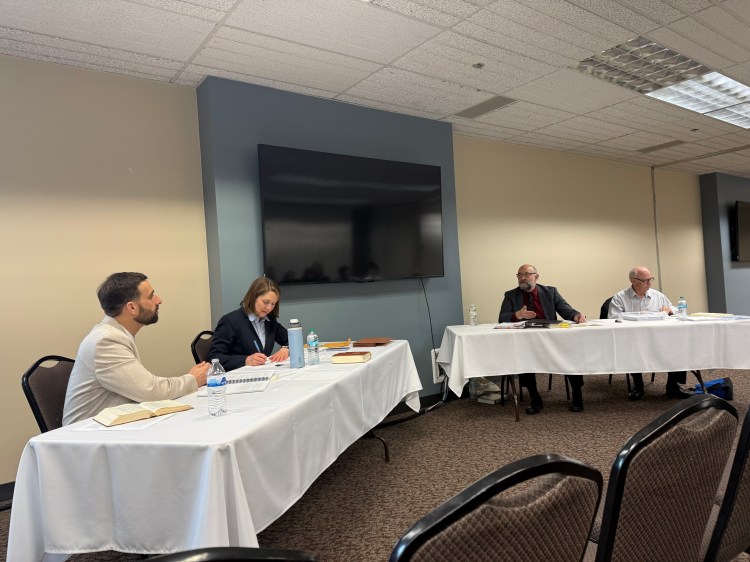
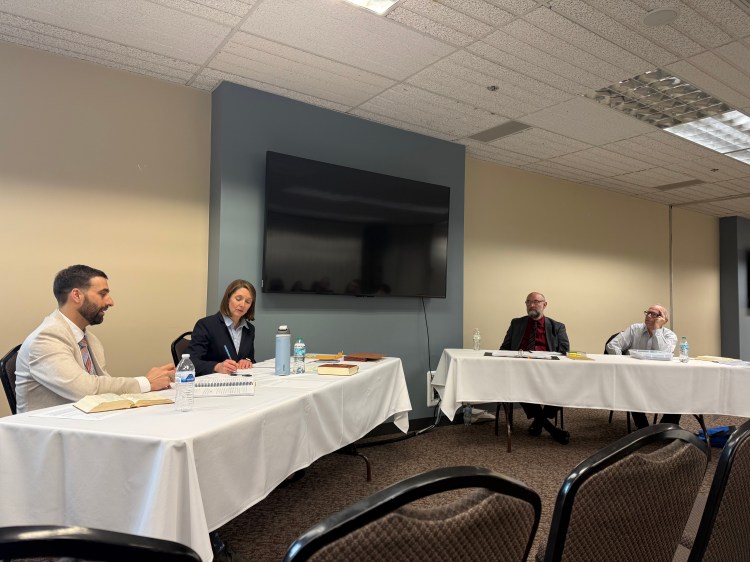
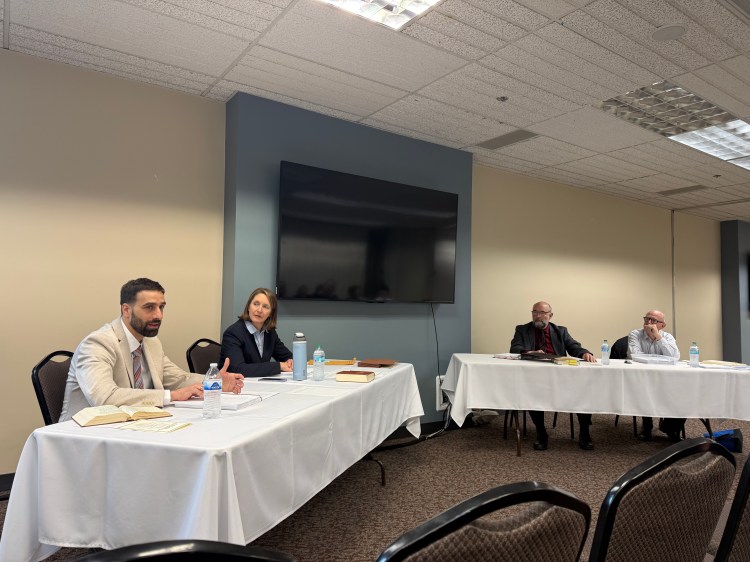
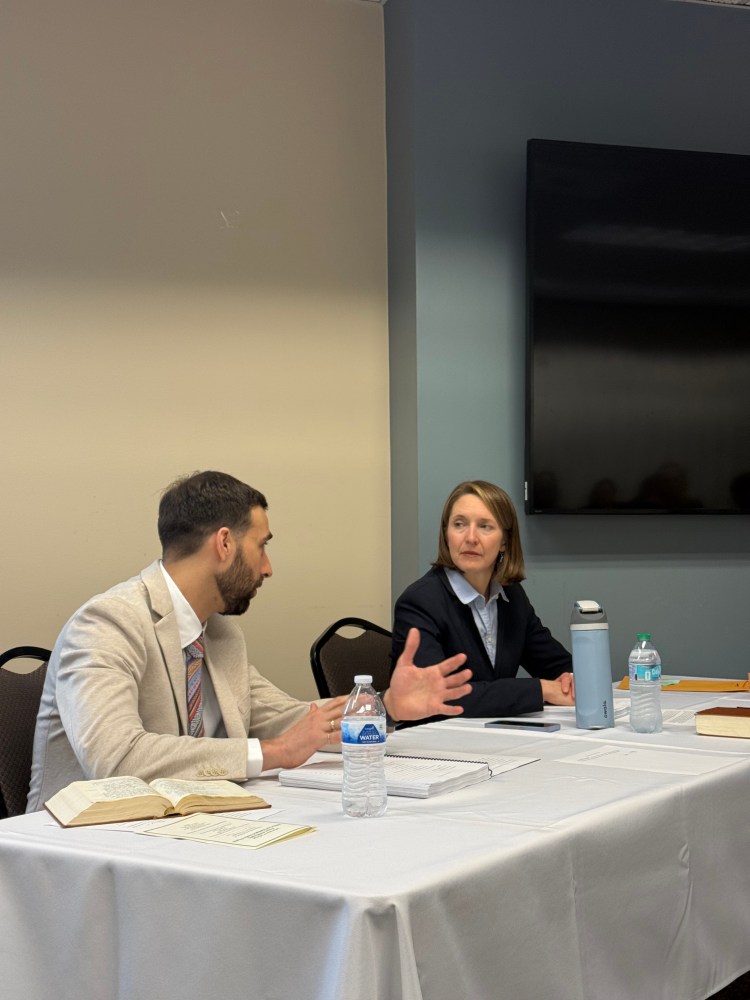
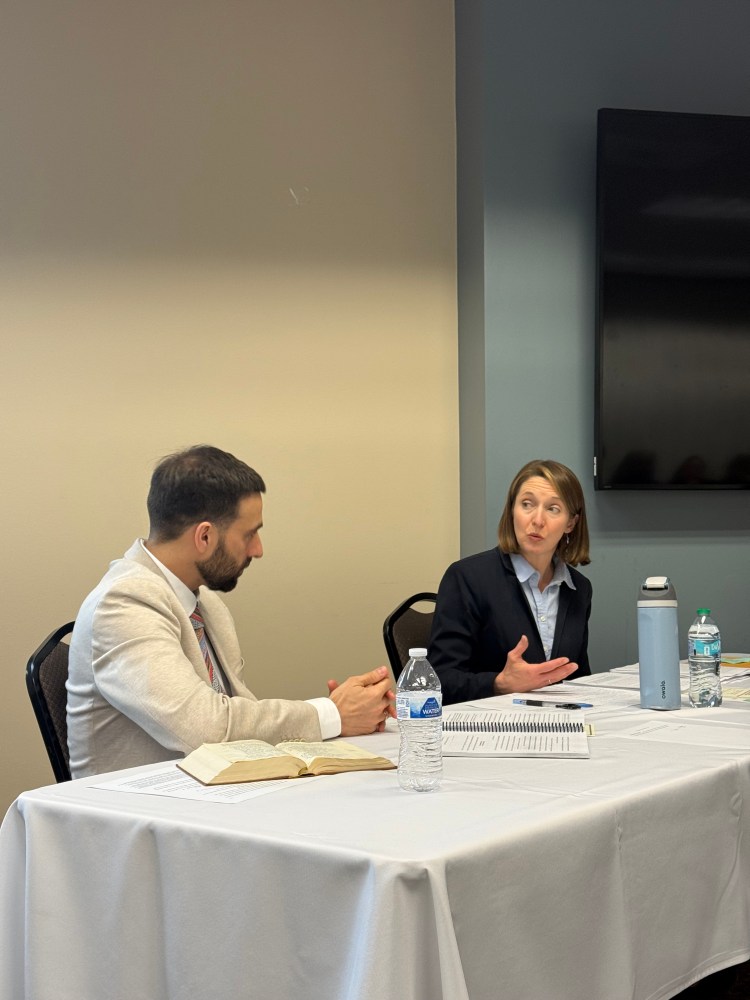
Comprehensive exam: On Thursday, March 19, Drs. M. Daniel Carroll R. (my advisor) and Richard Schultz grilled me on the field of OT studies and what it means to be an OT scholar who holds to evangelical convictions. They pushed to see what I knew, how well I could articulate it, and how I connect the dots across a variety of areas in OT scholarship. It was a pleasure to learn from these two amazing scholars who earned PhDs from the University of Sheffield and Yale respectively. For them to give me their stamp of approval as an OT scholar means so much.
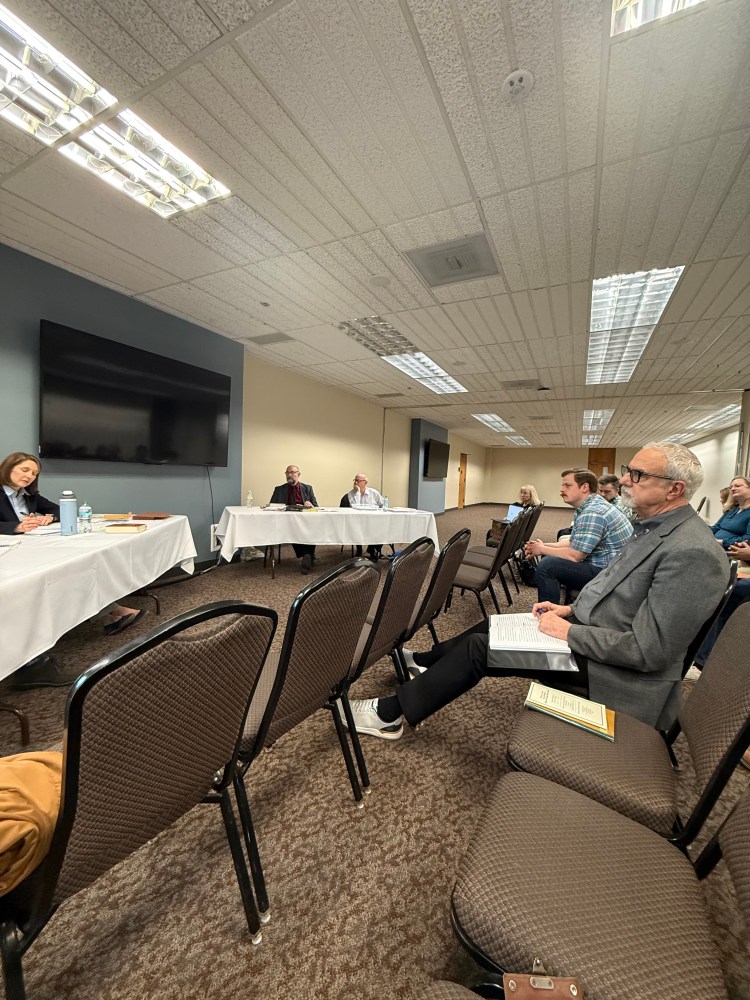
Dissertation defense: On Friday, in front of the Wheaton PhD students and faculty, Drs. J. Andrew Dearman, Richard Schultz, and Amy Peeler interrogated me from m 9:30 to 11:15 am. It was intense, difficult, rigorous, and fun! What an honor for these scholars to take the time to read the 337 pages of content that I wrote. They pushed me to clarify different parts of my dissertation and gave me ideas for how to make this work better. I passed with minor revisions!
From this experience, it could not be clearer to me that Wheaton desires to produce scholars who engage the academic world with rigor, seriousness, and evangelical convictions and pursue their vocation as service to Christ and His church. It will be an honor to walk across the stage in May to receive my Wheaton PhD.
But this leads to an important question…
Why did we spend so much time (five years!!!) and effort on pursuing this degree?
Adriana and I have asked ourselves this question countless times. Often the cost seemed far too high. But we kept coming back to the same thing.
This degree sets us up to address one of the greatest needs in the Latin American church: providing high-quality and contexualized pastoral and ministerial training.
In Latin America, most ministry leaders have no formal ministry or Bible education; there are very few high-quality resources being produced in Spanish, and few institutions exist that are dedicated to equipping Christian leaders. People that want training often must leave the country.
Think about that for a second… can you imagine having to leaveyourcountry to pursue training?
My dream is to train pastors, professors, and writers who go on to teach other pastors, professors, and writers so that the next generation of evangelical Peruvian leaders do not have to leave the country, as I did, to gain the training they need.
Earning a Wheaton PhD helps meet these needs in three ways:
It provides me with the credentials that the government will want to see as institutions strengthen and formalize.
It opens doors for writing and producing materials from and for the Latin American church. I can’t wait to begin to reflect theologically on different areas of the Peruvian reality to support the church in pursuing faithfulness to Jesus.
Far more important than credentials, Wheaton pushed me to my limits, causing me to reflect deeply and grow in countless ways. In short, thanks to Wheaton I will be much more useful!
To conclude, I’m posting the “Acknowledgement” section of my dissertation to say a big THANK YOU to the many people that have supported our family on this journey.
I have heard it said that finishing a dissertation is like giving birth. However, having witnessed the births of my four children, I can safely say that the similarities are minimal. I offered Adriana little more than moral support when my kids were born. We were thankful for the presence of doctors, but Adriana really did all the work. In contrast, I could not have produced this dissertation without a host of people.
Dr. M. Daniel Carroll Rodas, when we met, I was visiting Wheaton as the Director of Admissions for the seminary I attended and was recruiting students for our programs. One of my professors recommended that I meet with you and express my interest in the Wheaton PhD program. Honestly, it was a dream I had already decided not to pursue; I did not think I had a shot. But that first conversation turned this recruiter into the recruited. I found a kindred spirit, a person living betwixt and between cultures. From that day, you made me feel welcome and capable. Throughout this process, you have taught me so much about how to read the OT, how to bring my whole person to interpretation, and how to be a scholar. Your encouragement, wisdom, and feedback have sharpened my thinking and improved my writing. I am thankful to not only call you my advisor but also mentor, friend, and (of course always) Dr. Carroll. ¡Gracias! And Joan, thank you for your hospitality and care!
Dr. Richard Schultz, thank you for your prompt and precise feedback. Thanks to your green pen, I believe I finally (mostly) understand how to use commas and dashes. Your input made this project much better! To the entire PhD committee—Drs. Andrew Abernethy, Marc Cortez, Amy Peeler, Doug Moo, and Esau McCaulley—your investment in students makes the Wheaton program unique. Dr. Daniel Treier, we share a seminary alma mater and a love for the Lions. I was so looking forward to hearing your thoughts on my work. Soon after we met, you told me that you had been praying for my family for years. In your last email, after your diagnosis, you told me that you still hoped to chair my defense “or at least party from afar.” I never imagined that you would party from heaven. You made me a better scholar and theologian.
To my cohort—Andy Iversen, Bethany Grainger, Sean Long, Virginia Johnston, David Cho, and Luke Boone—from our first days in German as we commiserated, laughed, and texted (and studied some too) through the ups and downs of the past five years, you all have been a joy! I cherish your friendship and have missed you dearly the past year-and-a-half.
To the PhD student body, I am thankful for class interactions, lunch discussions, and so much more. Our conversations varied from serious theological matters to ridiculousness galore that often put our joint venture into the realm of biblical and theological scholarship into proper perspective. To the other Carroll students—Daniel, Auburn, David, Josh, and Rachel—thanks for your camaraderie and companionship.
Gerardo Corpeño, eres un gran amigo. Me alegra muchísimo saber que seremos colegas con Mesa Global por muchos años. David Zamora, gracias por tu amistad y compañerismo. Felipe y Berni, su puerta siempre está abierta para recibirnos. Me encanta cuando nuestros diez hijos juegan juntos… es una locura hermosa. Ustedes son más que amigos, son una bendición increíble para nosotros.
I am so thankful for the many people at Fellowship Church of Carol Stream/All People’s Fellowship that supported my family for the three years we lived and ministered there: Josh, Danny and Mary, Mike and Glenda, Deb and Ron, Elliot, Barb and Tim, Phil and Penne, Mike and Jennifer, and Jonathan and Chelsea.
Redemption City Church, for the past thirteen years, you have been the family Adriana, the kids, and I have needed, first as we adjusted to life in the US, and then as we became Michigangsters and Grand Rapidians. You made leaving Grand Rapids hard and leaving a second time nearly impossible. Words cannot express my gratitude. Josh and Emily, Mike and Jamie, Stephen and Kristin, Sebastian, Zak, Katy, Susie, Alex and Abby, Kevin and Christy, Jon and Sarah, Dan, Jesse and so many more, thank you! To our many supporters, thank you for your generosity, for believing in our vision, and for committing to the global church! To my profs and colleagues at GRTS, especially Jonathan Greer and Mike Wittmer, thank you for the excellent training you provided. Thank you, David Baer and Mesa Scholars for continually inspiring me to employ my scholarship for the benefit of the global church.
ADIEL, Victor, Lucho y Camincha, Ramiro y Carmen, la gente de Gente Joven, ustedes cultivaron mi amor por las Escrituras y por la iglesia. Ustedes me enseñaron que tan hermoso es ser parte de “una familia llena de amor…”
To my siblings—Mark, Stephen, Maria, and Joshua—and their families, the past year-and-a-half living in the same city for the first time since 2004 has been so much fun. You inspire me by your excellence in your fields and by your passion. Thank you for your encouragement and support. Christina, thanks for help with French! Annie, thanks for your generosity. Flavio, tu sabes cuanto te quiero, aunque me digas mil veces “estudiador.”
It is hard to put my gratitude into words for you, Mom and Dad. Mom, you are one of four people, including myself, that have read my entire dissertation. You, more than anyone else, have made me the writer I am today. Your persistent love, dedication, and willingness to give of yourself inspire me. Dad, I have often thought, without irony or joking, “If I could become just half the man, half the father, half the Christian, half the scholar that you are, then I will have lived well.” I will keep striving to reach that goal.
Aila, Ilana, Isaia, and Imara. Se me llenan los ojos de lágrimas al escribir estas palabras. Ustedes probablemente no son conscientes de lo que han sacrificado para que yo pueda escribir esta disertación. Gracias por soportar mis malos humores, mi frustración, y mis muchas horas de estudio y trabajo. Ustedes son una alegría. Los amo.
Adriana Vilca. ¿Que te puedo decir? Las lágrimas que llenaron mis ojos ahora se están cayendo. Tu, más que nadie, has entregado de ti misma por amor. Decir gracias no es suficiente. Has sabido cuando cubrir mis debilidades y ofensas y cuando retarme a ser un mejor padre y esposo. Has sido una compañera perfecta. Te amo y estoy tan agradecido por tu amor, tu constancia, y tu presencia.
“To him who sits on the throne and to the Lamb be praise and honor and glory and power, for ever and ever” (Rev 5:13)!
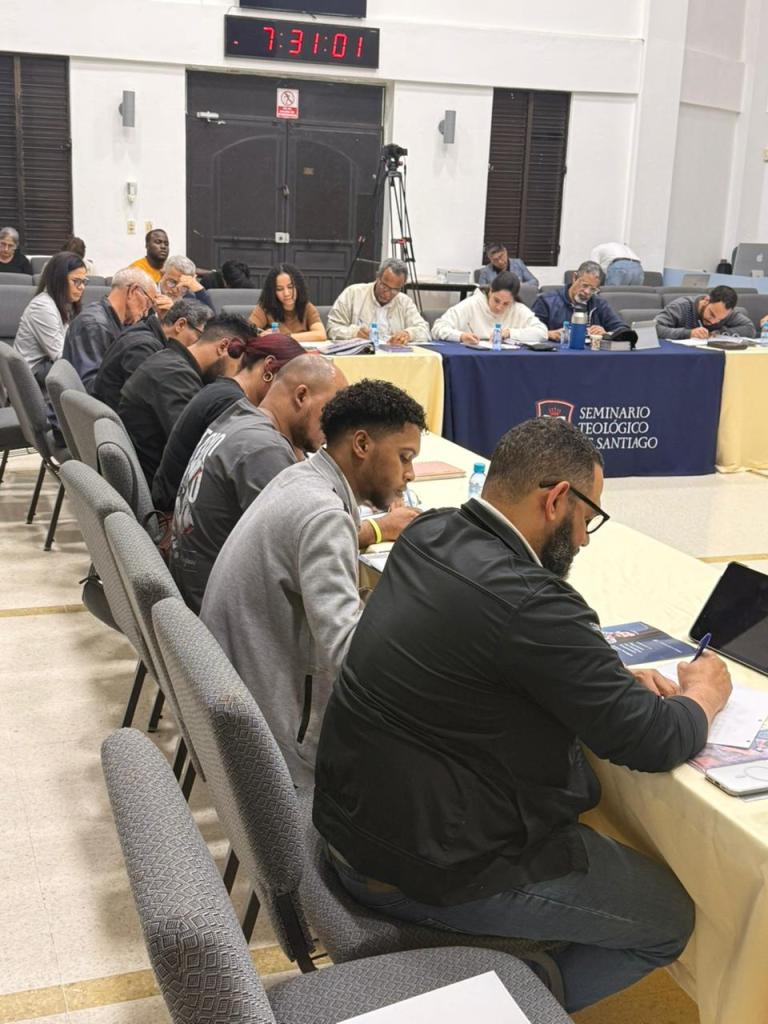
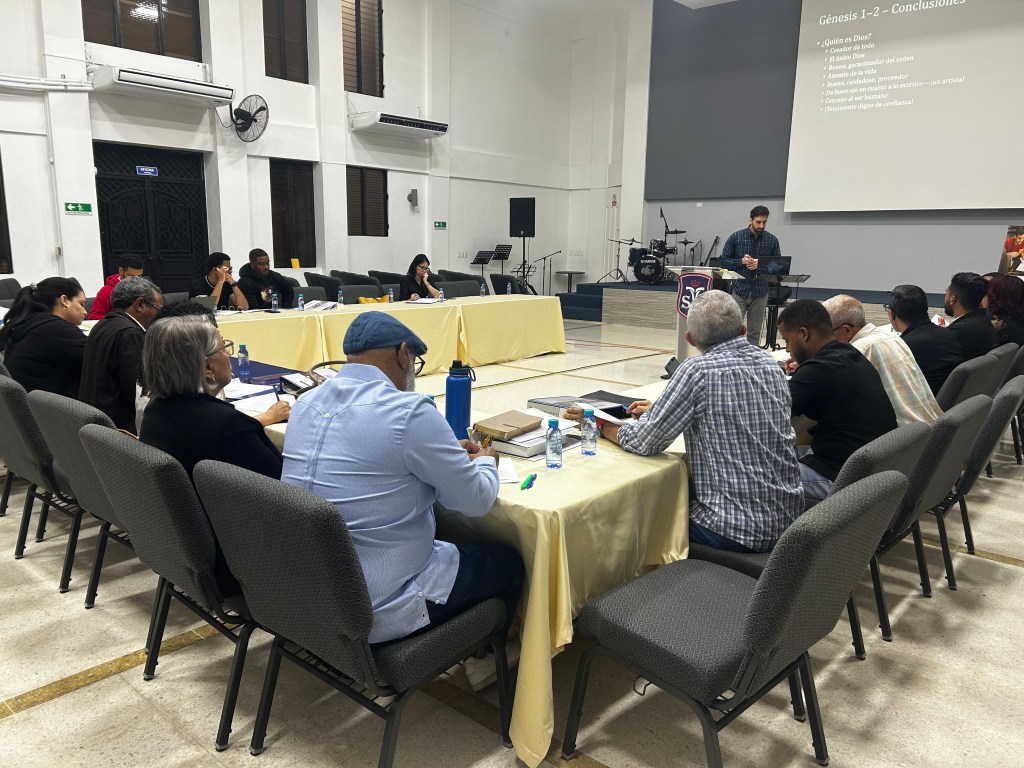
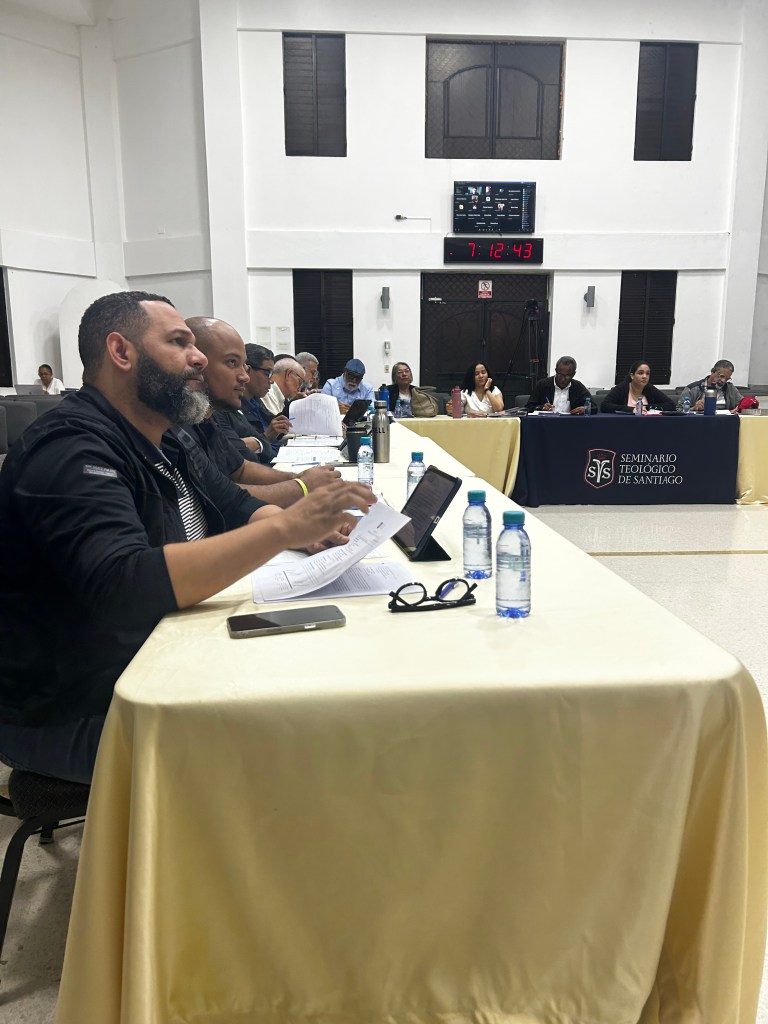
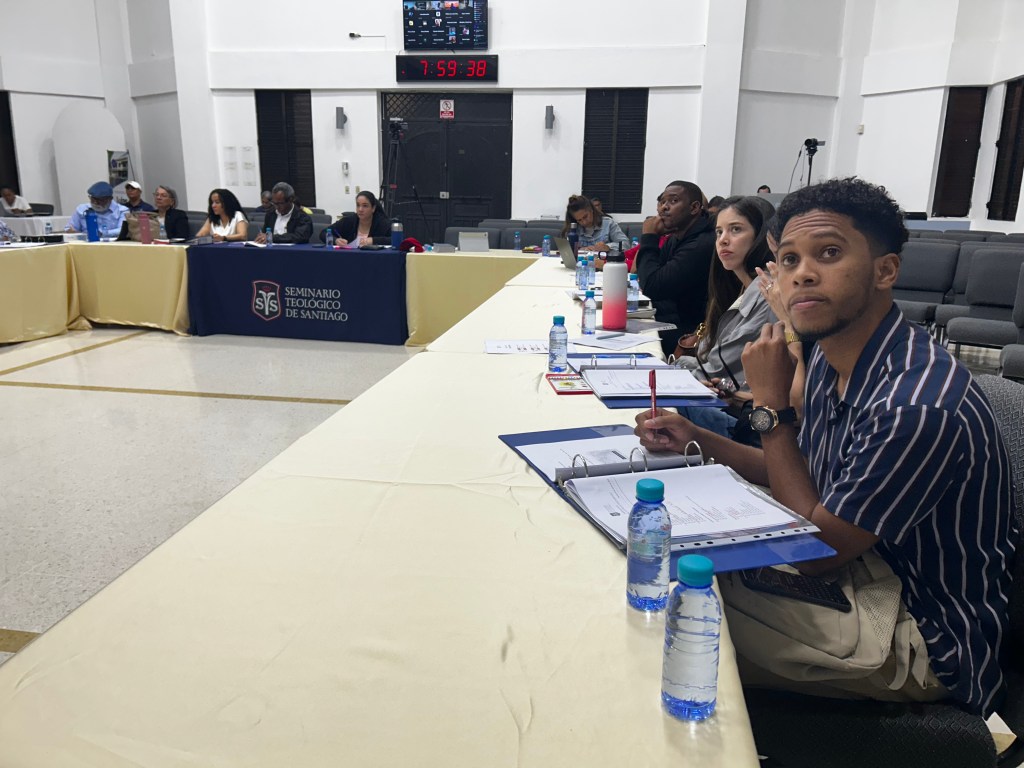
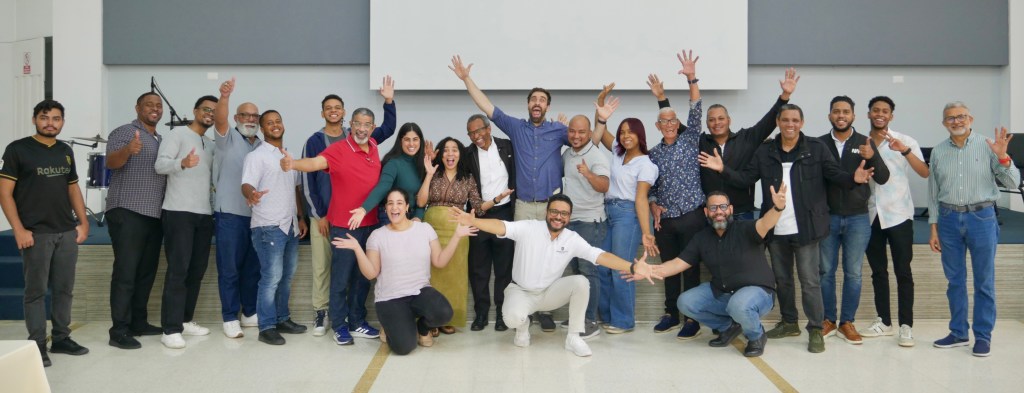
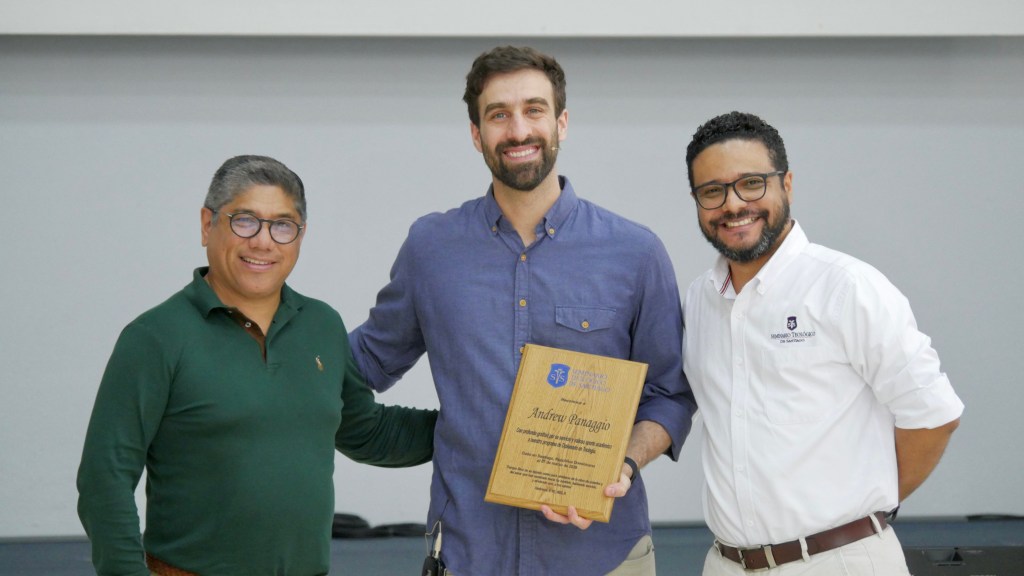
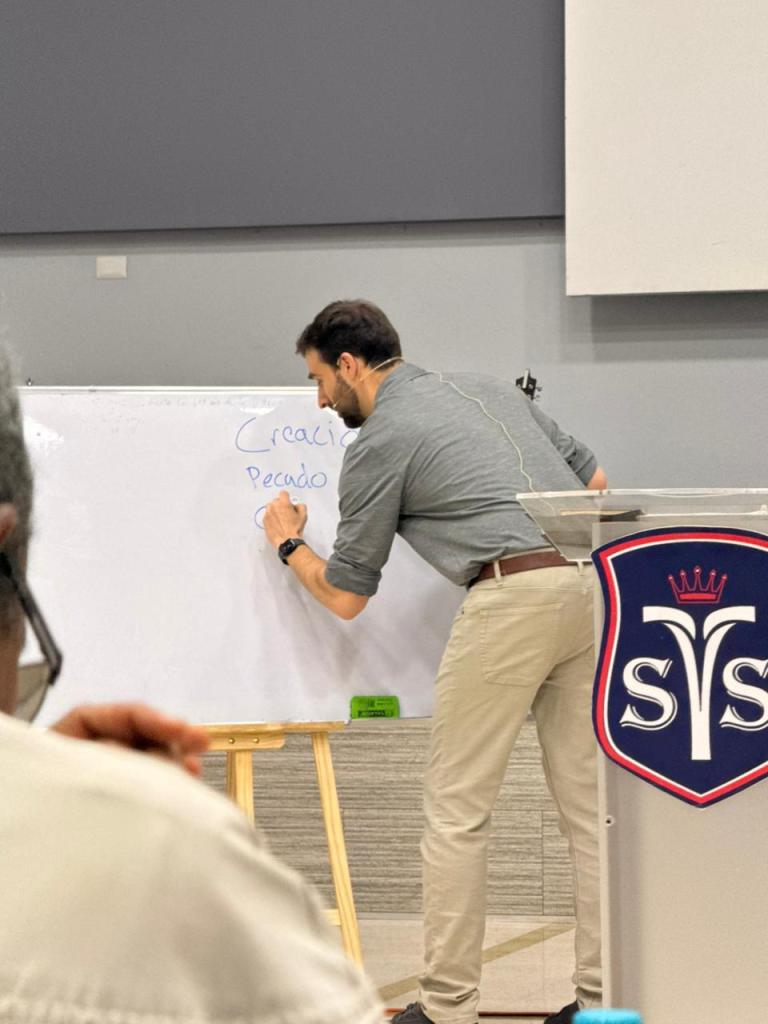
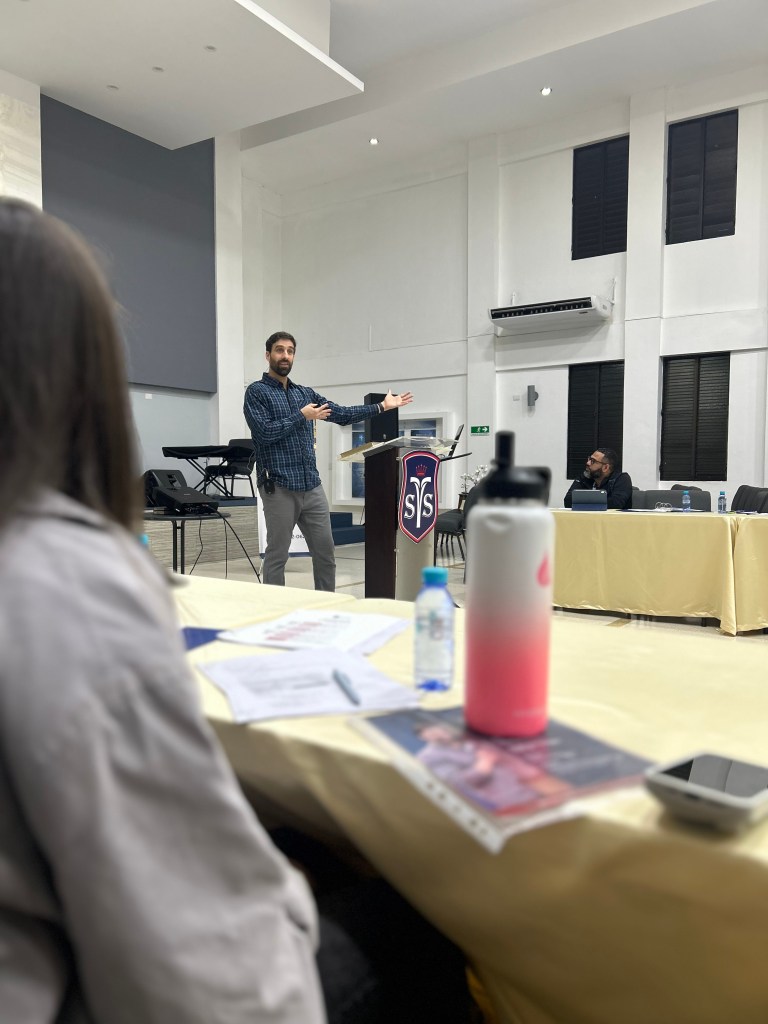
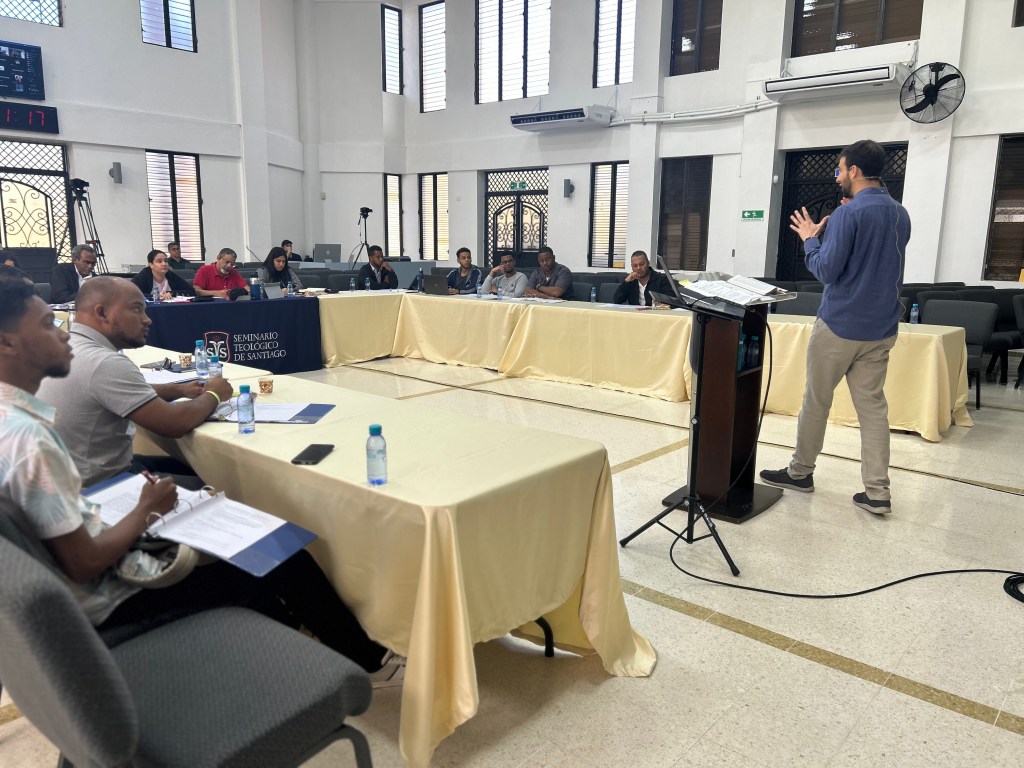
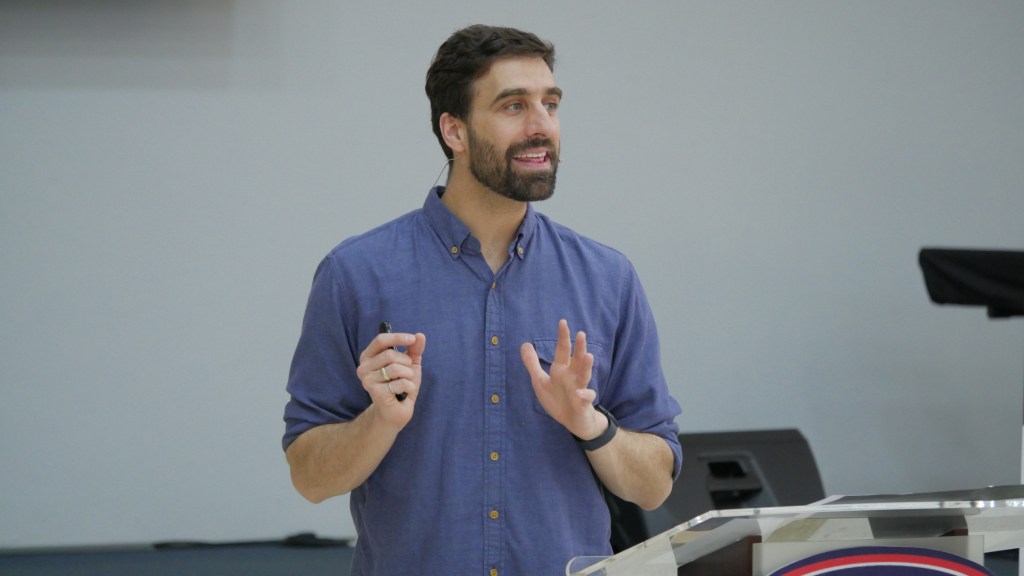
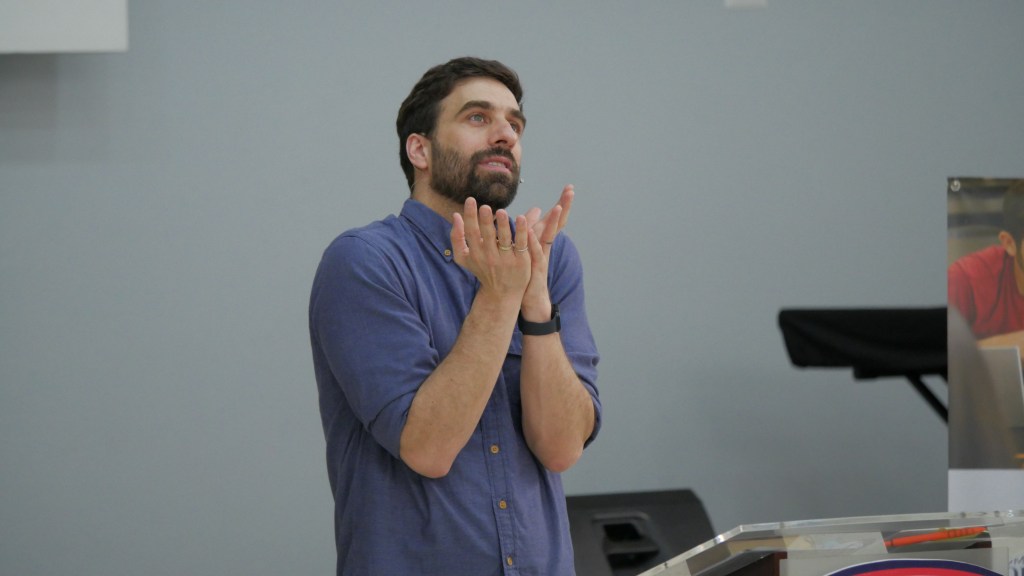
I returned late last Sunday night from a four-day trip to Santiago, Dominican Republic, where I taught survey of the Old Testament at the Seminario Teológico de Santiago (STS). For reflections on my visit to STS last August, see here.
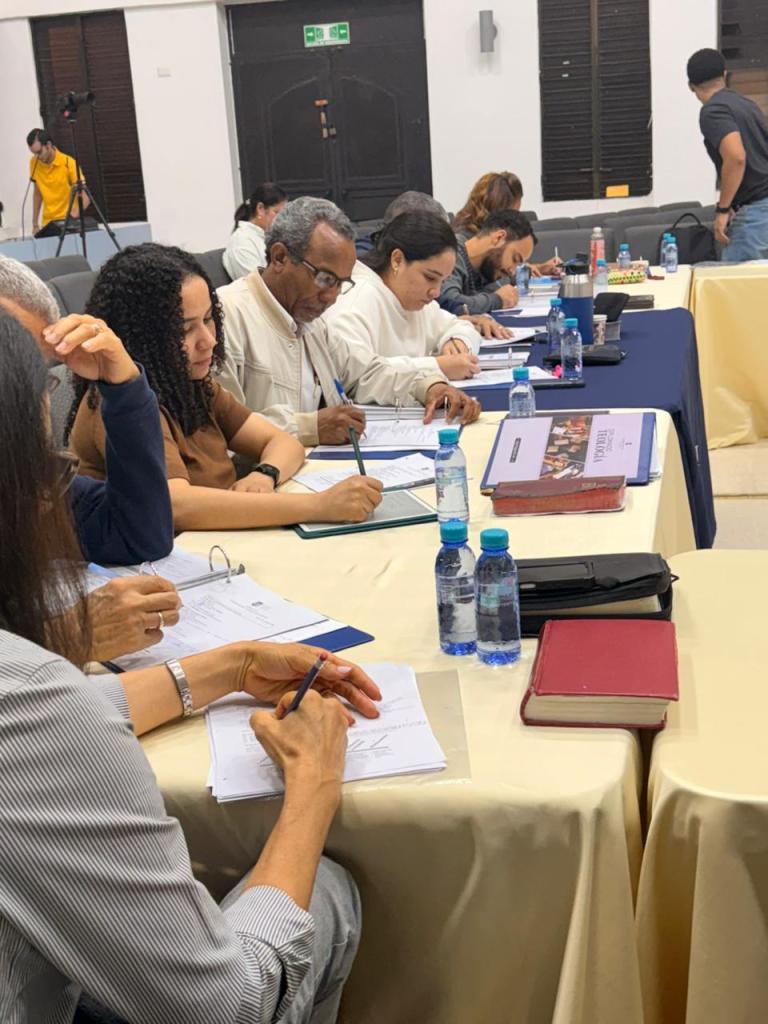
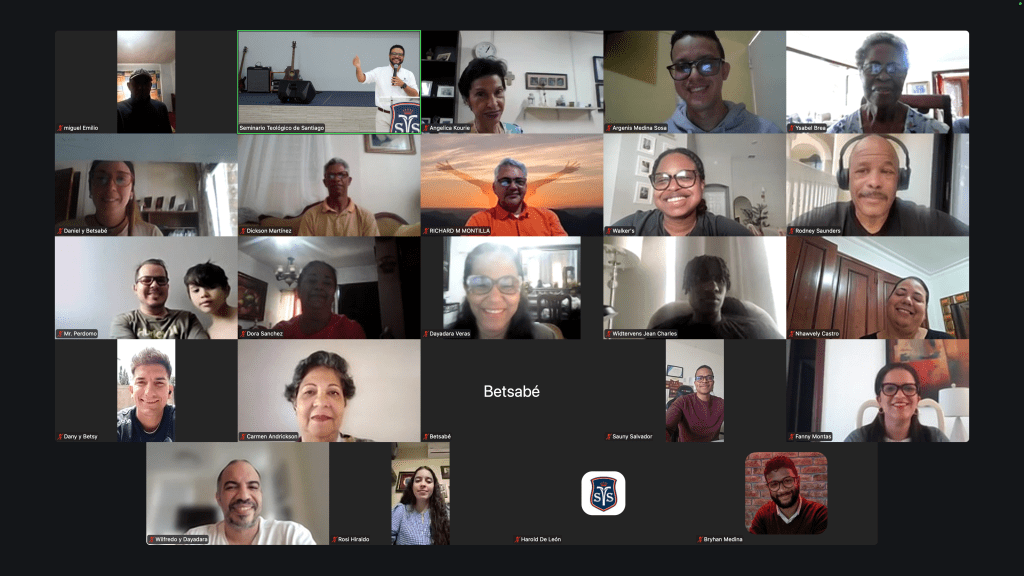
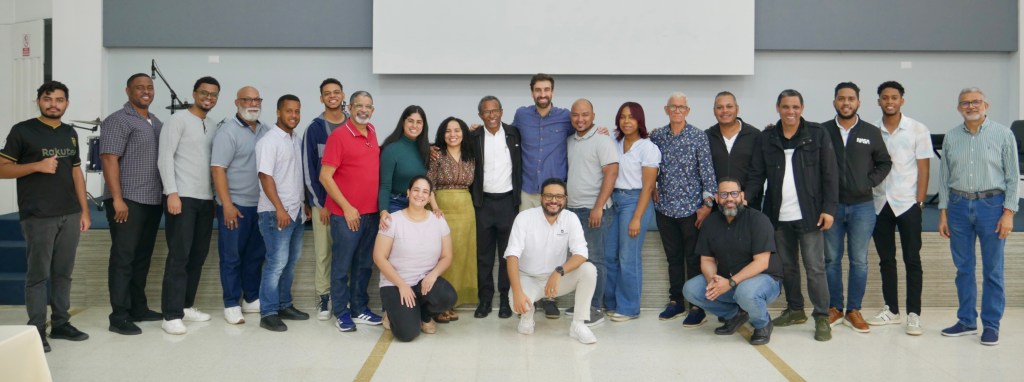
Around 60 students attended this course—40 connected via Zoom and 20 in person. I tried to make the class very interactive, so we had a lot of conversation, wrestling with texts and theological issues raised by the text of the OT. It was fun to hear both from those that were physically present and from many of those that connected virtually.
Here is a bit of info about a few of the in-person students:
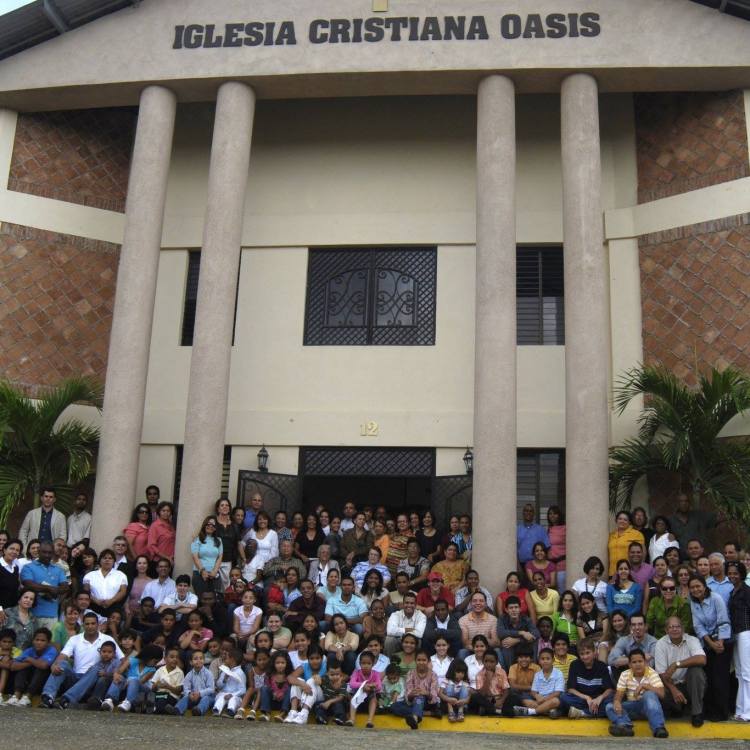
During the week, Adam works as a biotechnologist in the capital city of Santo Domingo, ensuring that tap water meets the necessary standards. On the weekends, he returns home to Santiago, two hours away, where he attends Oasis Christian church. He helps lead the youth ministry and is working on his diploma in theology.
Al serves at a Pentecostal church in Puerto Plata, a city on the northern coast of the island 1.5 hours away.
Another couple came Jarabacoa, 1 hr away, staying in a hotel two night to attend class.
Two other friends drove two hours from Santo Domingo to attend.
The demand for theological education is high! The students were excited and engaged throughout the course, even when class ended at 9:30 pm! Often in classes like these, professors from the US travel and teach via a translator. One student told me:
When I saw the picture promoting the class, I almost didn’t sign up because I thought you’d teach in English and someone would translate into Spanish. It’s so much better when we can learn in Spanish!
In the class, we studied the Old Testament, seeking to understand what God is doing in the world. We constantly asked two questions:
Who is the God of the Bible?
What does God expect of his people?
It was my prayer that the students would know God more through the Old Testament and that this course would help them to love God and serve him with humility, gratitude and faithfulness. One student commented:
This class helped me understand better the thread that knits the Bible together.
Thank you so much for your support of our ministry to train ministry leaders for Latin America!
PhD Tracker
This week I have my comprehensive exam (March 19) and dissertation defense (March 20)!
Please Pray
That I will have strength, perseverance, and a calm spirit as I defend my dissertation (three years of my life poured into this thing!).
That God would open doors as we seek to finish raising our monthly budget goal by June.
That God would put the details of our move in place (e.g., a shipping company, housing, all of the other details).
A taste of the OT
Throughout Genesis 1, the word “good” keeps showing up.
Day 1. Light… Good!
Day 3. Dry land and Seas… Good!
Day 3. Vegetation… Good!
Day 4: Sun, moon, and stars… Good!
Day 5: Sea animals, the great sea monsters(!), birds… Good!
Day 6: Land animals… Good!
Day 6: All that God had made… VERY GOOD!
It’s the same formula each time: “God saw that it was good!” God perceives, evaluates, and declares: GOOD!
In Genesis 3, another’s perceptive abilities take center stage. At the serpent’s prodding, the woman looks at the only prohibited tree, and…
the woman saw that it was good for food. (Gen 3:6)
She’s not totally wrong. All the trees are good for food and beautiful to boot (Gen 2:9). However, while this particular tree is just as good, beautiful, and full offood as the next, God said this one is not good for food.
Two processes of perception. Two opposite conclusions.
We all know what happens next. After seeing that it is good, shetook and ate and gave some to the man and he ate.
For the first time, rather than trusting God, humanity does what is right in its own eyes, kicking off a cycle that we cannot break even to this day!
Judges 21:25 puts it like this:
In those days there was no king in Israel. Everyone did what was right in his own eyes.
What is the problem here? No king? I don’t think so. Things don’t get much better once kings arrive.
I can’t help but hear Genesis 3:6…
She saw, took, and ate.
Judges describes it as anarchy. But the missing king isn’t David or Solomon. The missing king is the king Moses said rules in Israel: Yahweh (Deut 33:5). The problem is that even though there is a king, everyone sees and does whatever they deem best.
What’s the point?
At the root of the sin of the first humans (and the sin of every other human since) is, among other things, a lack of trust in God. Rather that accepting God’s declaration about the nature of reality—the appropriateness of certain trees for food, and the inappropriateness of others—we reject God’s declaration. We decide not to trust that God knows what he’s talking about.
Often that decision is accompanied by and may even stem from a distorted view of God. The serpent encouraged the woman to wonder if God really had provided everything they needed. Or was he holding back?
My desire, goal, and calling is to help people (including myself!) to know God more and trust God better through studying the Old Testament.
When I read the book of Exodus, I often have a hard time understanding, much less relating to, the Israelites. Israel suffers, performing back-breaking labor under an Egyptian king who stops at nothing to keep them in slavery, including killing their children. God hears their cries, demonstrates his power over rival “deities” and “kings,” shows that nature itself obeys his command, and frees them.
Not two months later, as they wander through the desert, the Israelites complain about their lack of food (Exod 16:1). Wait, what?! God just defeated the Egyptian army, the most powerful fighting force this side of the Euphrates without a gun, a drone, or a single casualty. Now they’re worried about food. What’s wrong with these people?!
That’s what I used to think. But then I thought about wandering through the desert. It’s hot, dry, and, well, food is sparse. My kids need a snack about an hour after their last meal. If I’m honest, I’m thinking about lunch about as soon as I finish my morning coffee. Maybe the Israelites aren’t crazy; maybe they are normal people worrying about normal things liking keeping their kids alive.
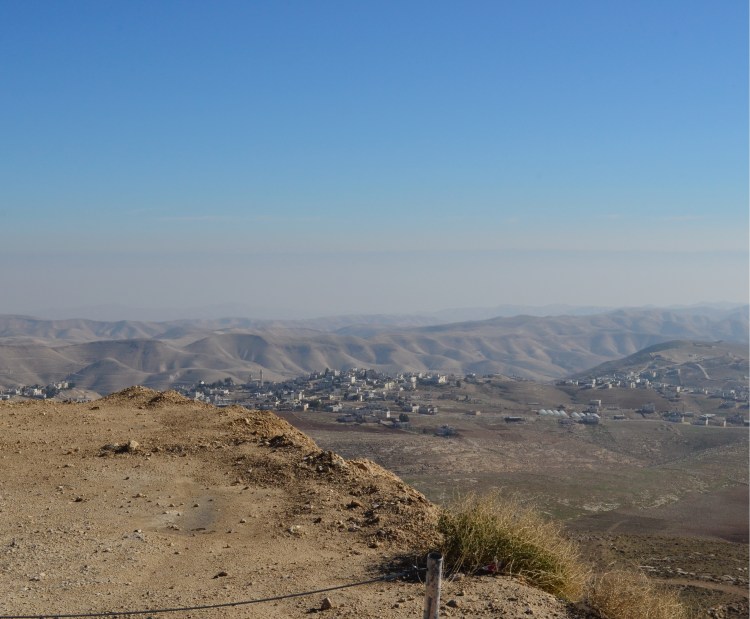
Judean Wilderness
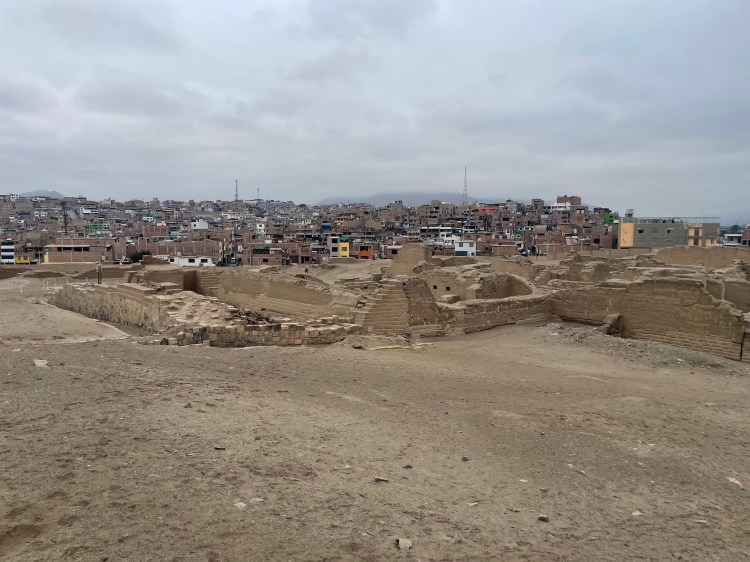
Desert outside of Lima
Then I thought about my own life. I’ve never missed a meal. I’ve never lacked anything that I truly needed. And I worry all the time about all sorts of things. Will we have enough in retirement? Will we be able to send the kids to college? Will we have everything we need to make it back to Peru in July? Oh. Wow. Maybe I’m a bit like the Israelites after all.
The Israelites worry about real problems. God hears them and provides so that “you will know that I am Yhwh your God” (Exod 16:12). He brings a dailyprovision of “manna.” Here’s the catch: although there is more out there, they can only get what they need for one day. They must trust every day that God will provide more the next day. Gulp. Easier said than done. My prayer these days is that God would help us to trust in him for our daily manna.
Ministry Updates
From March 4–8, I will be in Santiago, Dominican Republic teaching Survey of the Old Testament for the Seminario Teológico de Santiago. In this class, I want to help students see the missional trajectory of the Old Testament. God created this world full of potential for flourishing, vibrant life. Not even the scourge of human sin can stop God’s vision. After humans turn from God, he enacts a plan to bring his vision to reality. The end goal is for God to live with his creation: Immanuel, “God with us!”
This course serves as a great example of the need and demandfor theological education in Latin America:
I will have 60 students in this course—20 in person and 40 via Zoom. The students come from around the D.R. Most likely some will be in full-time ministry. The majority, however, will likely work outside of church, but desire to grow in their ability to know and serve the Lord. There is a high demand for theological education!
But there are serious challenges:
Lack of resources: I’ve searched for hours for an appropriate textbook. All the options I’ve found (all three that is) are translated from English. One is out of print. Two are 20+ years old. I settled on the best I could find. It is so frustrating to have an entire bookshelf of books in English and not even a handful in Spanish! Translations are great. But they are not the endgame. We need resources produced in Spanish from and for the Latin American church!
Lack of professors: I visited this seminary in August of last year. I LOVE what they are doing and am honored to support them by teaching. One of their biggest struggles is finding professors. Most of their teachers come from the US and do not speak Spanish, so a live interpreter makes the lesson understandable for the students. This is great. But it is not the endgame. We need highly trained profs from Latin America who teach in Latin America.
That is why my dream is:
To teach pastors, writers, and professors who go on to teach others so that the next generation does not have to leave their country (as I did back in 2013) to gain the training they need and desire!
Ministry Partner Tracker
Monthly support pledged
60 % of goal
We are planning on moving to Peru in July… our lease ends at the end of June, so we’re really trusting that God will provide by then. Our mission requires that we reach 100% before we can buy our tickets.
Family Update
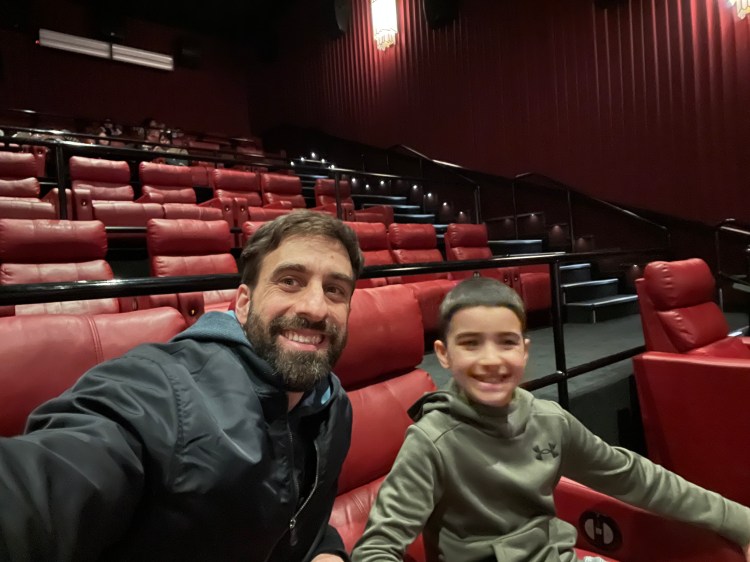
Watching Goat with Isaia
Icebladding?
Fake-summer
For a variety of reasons, Adriana has decided to leave her job at Wedgewood. She has enjoyed working with children on the autism spectrum for the past few years. Going forward, she will be focusing on the countless things we need to do to prepare to move this summer.
Ph.D. Progress Tracker
March 19: Oral comprehensive exam
March 20: Dissertation defense
PhD Colleagues
Dr. Carroll
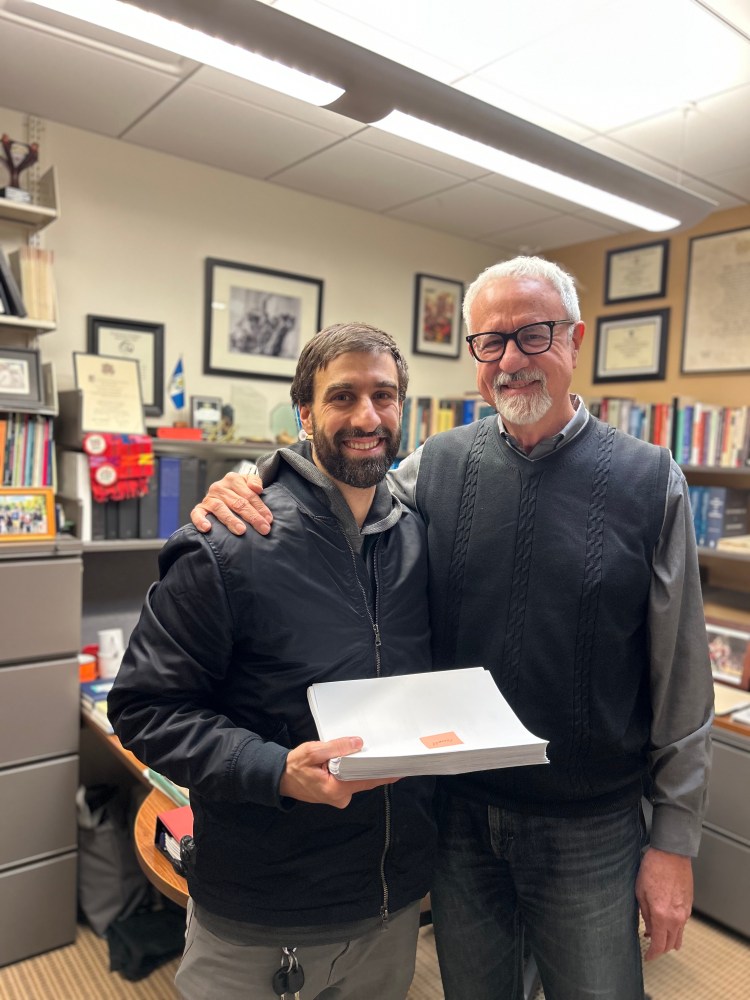
Turning in my dissertation
Please Pray
That we would find joy these last few months in the US while we also prepare to leave.
That God would give the kids peace during this transition. They are beginning to think about the practicalities of the move… can we bring this or that toy? We have to say goodbye to all our friends here and then find new friends in Peru?
That God would open doors as we seek to finish raising our monthly budget goal by June.
That God would give us energy and wisdom as we manage the details of an international move.