I began this mini-series to explain why my family’s ministry focuses intently on formal theological education (TE). I’ve said that TE is training in things related to God, and it takes a variety of forms—from Bible studies to sermons to seminary degree programs. Formal TE seeks to equip ministry leaders, those who teach and preach and carry a burden of responsibility for the people of God. TE should be integral (addressing the whole person with an eye towards all of life) and formational (moving people towards conformity with Jesus). My aim as a theological educator is to help people know God more deeply and fully so they see the world from God’s perspective and live in the world according to God’s design.
Thus far, I’ve tried to make the case that TE is central to the mission of the church. In the “great commission,” Jesus commanded his followers to do the work of TE: “teaching them to obey everything I have commanded you” (Matthew 28:20). The rest of the NT echoes this command, and the early church took it to heart as “they devoted themselves to the apostles’ teaching…” (Acts 2:42). The church cannot see TE as an optional “add-on” to evangelism or a take-it-or-leave-it supplement to the “real” or “more important” work. Faithfulness to Jesus requires that the church do TE. Yet, this work is not without perils!
Why theological education?
Reason #4: teachers have a dangerous job!
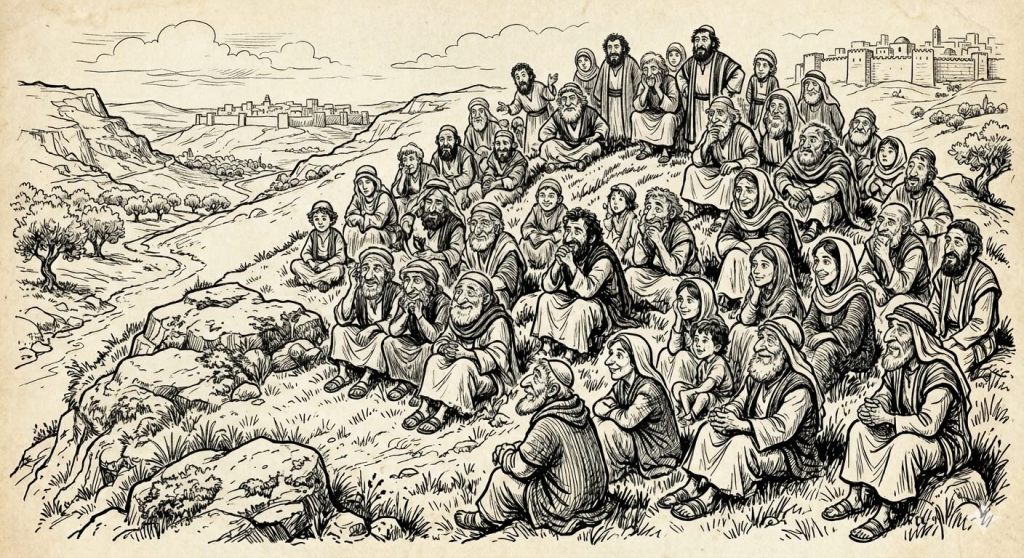
In the sermon on the mount, Jesus anticipates a problematic response to his ministry. Given the authority with which he speaks and the depth of his wisdom, some might mistakenly think that his teaching replaces the teachings of the Old Testament. “No! No! No!” Jesus says, “Do not think that I have come to abolish the Law or the Prophets…” (Matthew 5:17). “Law” and “Prophets” refers to the first two of three sections of Israel’s Scriptures (the third is called the “Writings” or sometimes “Psalms”). Jesus came to fulfill the OT. He exemplifies how to live in full accordance with God’s teaching, putting on display an abundant life in perfect relationship with the Father. Jesus presents himself not as a replacement of the Law but as its ultimate interpreter and embodiment. And those that follow in his footsteps, well they better follow in his footsteps! After all, “anyone who sets aside one of the least of these commands and teaches others accordingly will be called least in the kingdom of heaven, but whoever practices and teaches these commands will be called great in the kingdom of heaven” (Matthew 5:19).
Teachers face a tall task! They must interpret,* appropriate, and communicate God’s instruction in changing times and contexts. When they do this poorly, when they lessen the demands of God’s kingdom, setting aside Jesus’ commands and teaching others to do the same, they suffer the consequences. They’re called “least” in God’s kingdom. I don’t know exactly what that means, but it is not good!
*Reading always is interpretation; note how Jesus says “you have heard…and I say” throughout the sermon on the mount.
Yet, it’s no safer to increase the demands! Paul warned about those that judge others based on what they eat and drink and their religious celebrations; he talked about those that make extra rules and commands that “indeed have an appearance of wisdom…but they lack any value in restraining sensual indulgence” (Colossians 2:16–23). Jesus criticized the Pharisees for making heavy burdens for the people (Matthew 23:1–4) in contrast to Jesus’ light burden (Matthew 11:28–30). No, establishing rules and requirements that add on to Jesus’ commands will not do.
Navigating life in Christian freedom requires discernment, humility, the enlightening power of the Holy Spirit, and guidance! Teachers, those that offer guidance to others, have a responsibility to do this well because they wield a dangerous power: the power of the tongue. James warns would-be teachers to think twice about this vocation because “we who teach will be judged more strictly” (James 3:1)! He then describes how the tongue, though small, “is fire, a world of evil among the parts of the body” (James 3:6). An impetuous, careless, or manipulative word can set a person’s life on fire.
Teachers must bear this responsibility with fear, trembling, and boldness. They must speak the truth confidently, guiding people towards the Lord. They must speak with humility because when they err, and they will do so, they can do loads of damage to others and to their own souls—the Lord will judge them! Leaders must care for God’s flock with love and gentleness, wisdom and perception, and with a recognition that they serve the Lord and the Lord’s people, not themselves!
As Hebrew 13:17 says, leaders “keep watch over you [their flock] as those who must give an account.” Church leaders have a dangerous task. God holds them responsible for the way they care for God’s people. By virtue of their role, they wield significant power. And they must seek to empower people to live faithful lives in Christian freedom, giving way to neither license nor piling on unnecessary demands.
So, why theological education?
Because theological education aids preachers, teachers, and leaders in their dangerous task! Through formal training, people learn to interpret God’s word, come to know God’s character more fully, and reflect on how to embody God’s teaching so that they can communicate God’s word faithfully and guide others as they follow Jesus.
